Questions are being asked on what to do with the Auckland Council Civic Building that currently houses the Councillors, the Deputy Mayor, and support infrastructure (including staff) before they all move to the new complex at the old ASB Tower at 135 Albert Street.
From Auckland Council:
Future of first skyscraper up in the air
The future of New Zealand’s first skyscraper, the 100m tall Auckland Council Civic Administration Building, is in the balance. To be vacated by the council later this year for new headquarters at 135 Albert Street, the building has serious structural issues and would require an estimated $70million retrofit to give it a new lease of life. The council has no further identifiable use for the building – designed in the 1950s and opened in 1966 – so it faces possible demolition or refurbishment for other uses, the Finance and Performance Committee heard today.
At the leading edge of building technology when constructed, the building is not listed for protection but two recent assessments suggest it worthy of Category A or B scheduling. Category A listing would limit the type of renovation permitted.
Refurbishment would have to include removing asbestos installed during construction as a fire retardant.
The committee decided to test the market for investor interest in refurbishment and at the same time request Regional Facilities Auckland, a council controlled organisation, to include the building in a review of possible future uses of the Civic /Aotea Centre precinct.
“Market testing and precinct planning opportunities will allow us to determine the future of the building with a complete picture of options and costs,” said committee chair Councillor Penny Webster.
Staff will report back before the end of the year.
—-ends—-
Personally I say demolish it and either put a plaza there our some other new building to support the Aotea Centre.
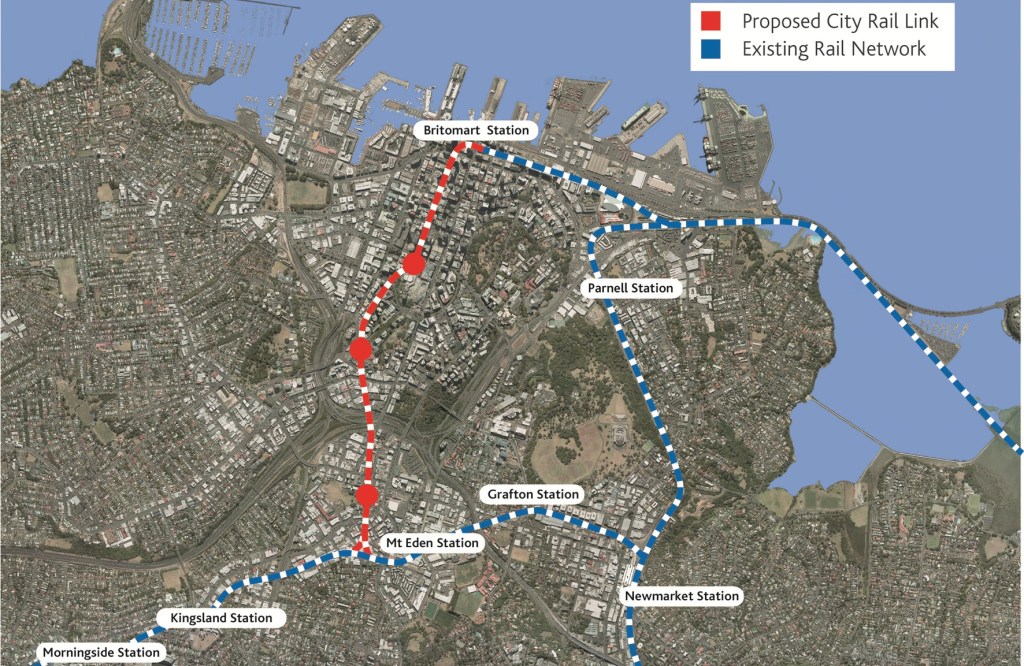
Commissioners have confirmed CRL Designation From Auckland Transport: Big step for Auckland’s City Rail Link 14/04/2014 10:41:53 p.m. The City Rail Link (CRL) has reached a major milestone … Continue reading City Rail Link Designation Confirmed
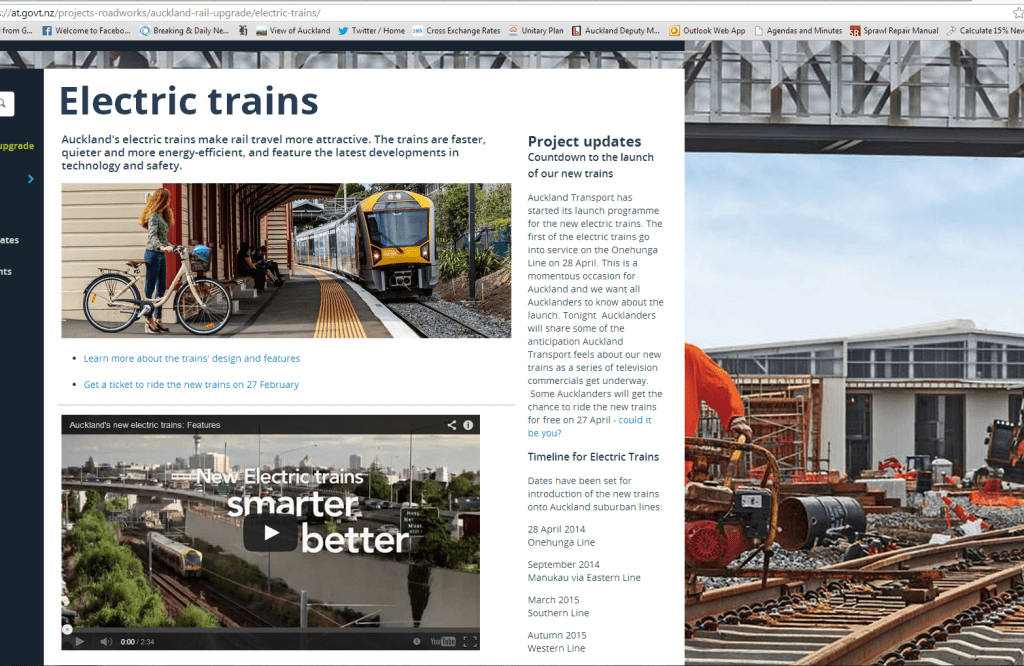
No I did not make an error in the last post either…. In my very recent Southern Line EMU Roll Out is March 2015 (April 9) post I noted the roll out of … Continue reading EMU Roll Out Dates Changed Again?
8,900 counted so far I sent a question away to Auckland Council on how many submissions for the Proposed Auckland Unitary Plan (PAUP) as news around the PAUP has … Continue reading 8,900 Submissions to the Unitary Plan
Where is our disconnect with youth and employment? Yesterday Mayor Len Brown kicked off a Youth Summit in the CBD to illustrate the high youth unemployment problem in Auckland, … Continue reading Youth Connect – Our Youth Disconnect
A week ago I critiqued Watercare (who provide our fresh and waster water services in Auckland) on their decision around a recycled storm-water scheme in Stonefields. You can read it here: Patch Protecting or Genuine Concerns?
This morning I noticed (and a few others) the editorial for the Herald this morning commenting again on the recycled storm-water scheme. Lets take a look bit by bit from the editorial this morning shall we?
Stonefields, a village-style residential development in what was the Mt Wellington quarry, has branded itself with environmental “sustainability”. The basis of that brand was a dual water supply. Every house built so far has both a drinking-water supply and a “third pipe”, bringing surface water from a central reservoir to toilets and outside taps. The system may have saved water from the metropolitan supplier, Watercare Services, but saving water is not the supplier’s prime concern.
Many, in fact, will suspect the monopoly supplier’s refusal to operate Stonefields’ scheme as intended is motivated by the simple desire to maximise its revenue. Not so, says Watercare. The scheme, it says, would have cost Stonefields residents more than they will pay for the normal water supply. And since the groundwater collected for the third pipe would not have been treated to the same standard, it would have been charging those residents more for a supply of lower quality.
Common sense is probably on the side of Watercare. Surface run-off, especially from roads, is polluted. It was going to have to be treated as it was pumped from Stonefields’ collection tank to the reservoir, though not to a drinkable standard. The company says the cost of collection, treatment and pumping would have resulted in Stonefields residents paying five times the cost of Auckland’s potable water. And most of the third-pipe water would be flushed into the same second pipe, where it would need sewage treatment and disposal
……
“Many, in fact, will suspect the monopoly supplier’s refusal to operate Stonefields’ scheme as intended is motivated by the simple desire to maximise its revenue.” When you read the rest of the editorial I wonder but not help that is “bending the truth” to a wide degree.
What would be nice if the editorial posted some hard figures on the actual cost Watercare is purporting for the third pipe recycled storm-water scheme. Costs that include both the set and operations of such a facility in comparison to the normal set up we already get. Then for good measure some comparative costs from overseas as well as the private sector to see if the scheme is not value for money as Watercare (and the Herald) claim
I also note saving water is not Watercare’s main concern. Well no if it is out to maximise income and profits which is telling as we further get down the editorial.
Cost is not the only consideration. Enthusiasts for third-pipe water conservation ought to consider what would be lost. This is a country in which the water is safe to drink. To slake a thirst, we turn on the nearest tap without a qualm. That would change if not all piped water could be trusted. The outside taps at Stonefields were to carry a sign that the water was not safe to drink. Do we really want that?
The former Auckland City Council ought to have thought of all these practicalities before it invoked principles of sustainability and made third-pipe reticulation a feature of Stonefields’ development consent. Its own water retailer, Metrowater, was going to run the system. But for the Super City’s creation, and the bulk supplier’s takeover of the whole system, the true costs of “sustainability” might never have been known.
….
I assume whoever wrote this has never been around much as plenty of outside taps (not drinking fountains) even in urban Auckland carry the Do Not Drink sign above the said tap. And can someone tell me – who races to the garden hose and drinks out of it – regularly? So a really weak excuse here in that section of the editorial.
Thanks to the Waikato River, Auckland will never be short of water. There is no point conserving the water for its own sake if it must be replaced by a costly supply of inferior standard, no matter how interesting or exciting the environmental engineering involved.
…
I am quite sure the people of the Waikato – especially those who use or treasure the river will be quite comforted that Auckland will never be short of water thanks to Watercare drawing water from there and then pumping it to Auckland after it treated – NOT. I am aware Watercare are seeking consent to double the amount of water intake from the Waikato River to pump into a growing Auckland. This consent process has riled the people of the Waikato as the extra intake will no doubt put strain on New Zealand’s longest river. It is of note the lower Waikato is reliant on rainfall, Lake Taupo and the Waipa River for its water flow – and it is certainly not unlimited either. Just look what happens when our South Island hydro stations get dry years and the knock on effects downstream…
Now if you want a contradiction then check this last bit from the editorial
More water falls on Auckland than the city can use. Only a fraction of Stonefields’ storm water was to be channelled into the third pipe. Most would have drained to the Tamaki inlet. Reducing stormwater pollution of the sea around Auckland is the real challenge. Collecting tanks and treatment may be the answer, and if the water can be put to a cost-effective use, all the better. But recycling for a needless purpose at greater cost is not sustainable.
—-
Okay so more water falls on Auckland than we can use yet we get 10% of our total supply from the Waikato with Watercare wanting to increase that to 18% of total supply. Auckland also in 1994 suffered a drought which eventually led to the Waikato pipeline being built in the first place so that Auckland would not be faced with a similar situation again. So which way is it? We get enough rain that we do not need the Waikato, or is Auckland that large that we need the Waikato to supplement our dams.
In any case the real question that begs to be asked is ‘who actually wrote the editorial?’ Watercare or the NZ Herald themselves…




 Talking Southern Auckland