Some Councillors need to be disciplined – STRONGLY! Yesterday after the Governing Body meeting was the next round of the Auckland Plan Committee meeting. The purpose of these open … Continue reading Latest from the Auckland Plan Committee
Some Councillors need to be disciplined – STRONGLY! Yesterday after the Governing Body meeting was the next round of the Auckland Plan Committee meeting. The purpose of these open … Continue reading Latest from the Auckland Plan Committee
Oh dear it seems someone (or rather some Association) has spilled their cup of tea and decided to have a moan in the media. Yes I am being rather unflattering towards the Karaka Residents and Ratepayers Association but, upon reading the following Courier article can someone explain on earth is really going on here please?
Lets take a look at the said article to get some context shall we?
From the Papakura Courier and the ever-so reliable Dubby Henry
Community groups aim to speak out
Franklin residents could soon have a powerful new voice if community groups get their way.
Groups across the area want to form a united “de facto community board” to rival the Franklin Local Board as a voice for disenfranchised residents.
The group will speak on key overarching issues such as the Auckland Council‘s Unitary Plan, transport and infrastructure.
The Karaka Residents and Ratepayers Association is driving the move and is working on signing up the 20-plus groups stretching from Kawakawa Bay to Waiuku and Buckland in the south and Alfriston in the north.
Association chairman Steve Bird says many groups have already expressed interest.
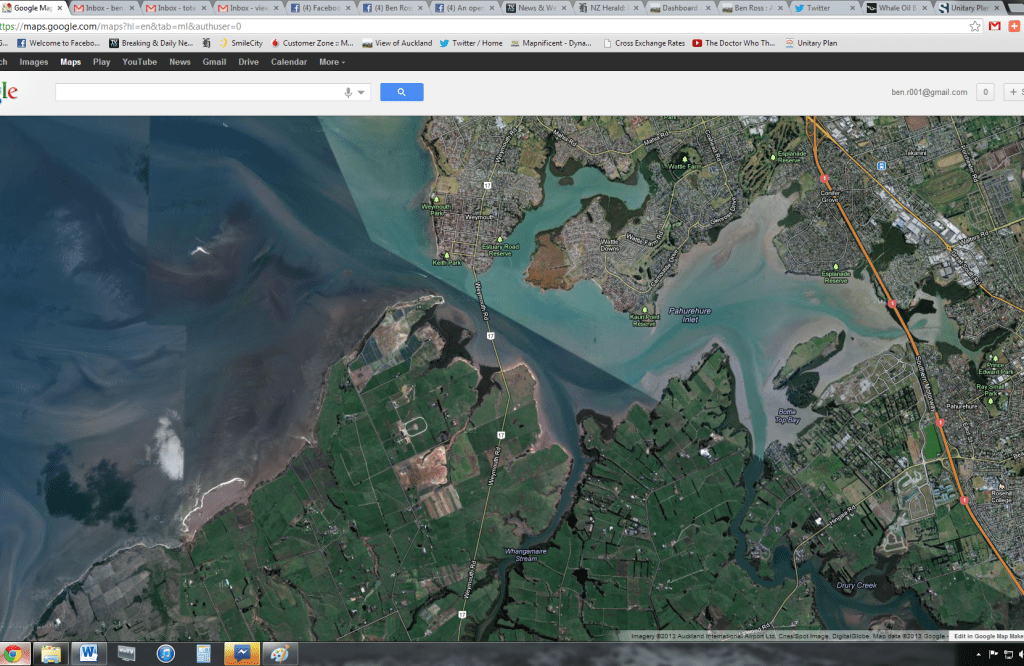
He says the move has been in the works for some time but its necessity has been highlighted by the recent furore over the Karaka-Weymouth bridge.
That saw residents’ groups in Weymouth and Karaka arguing with each other when they could have united earlier against the development.
Many Franklin residents feel voiceless in the super city, he says.
Big turnouts at residents’ meetings suggest people are not getting information from the local board or from Auckland Council so “we are circumventing that system”, Mr Bird says.
He hopes a united group will have “strength in numbers” and will force the council to listen.
Smaller groups in outlying communities will especially benefit from a bigger group going in to bat for them, he says.
…
Right let me get this right? Weymouth and Karaka residents were arguing against one another over the now shelved Karaka-Weymouth Bridge?
Last I looked and I was there personally at the those meetings over THAT bridge I saw Weymouth and Karaka residents UNITED against the Karaka Collective and their supporters. Both over and AGAINST that bridge as well as the Karaka North and West Rural Urban Boundary issues.
It was also due to superb planning by Council Planners, some very fine work by the Franklin Local Board, and the united stand in Franklin, Karaka and Weymouth that is seeing the “Corridor” option of the Southern RUB being advanced through the Unitary Plan as the best option. The Karaka North and West options like THAT bridge have been shelved.
So apart from a Council Comm’s cock-up with the Deputy Mayor acknowledged (and most likely someone got roasted for it back in Council) I’d say for the most part in regards to the Southern Rural Urban Boundary and that bridge, Council did listen.
In saying that I realise there are issues with the Large Lot and details around the Rural Zones – that was apparent in today’s Committee meeting. I did hear today from the planners that those issues are still being worked through with the respective Local Boards at the moment.
As for force in numbers and “forcing” Council to listen. Good luck with that guys. If anything the Council will more likely go tell you to jump rather than listen to what will most certainly be an enlarged unresponsive NIMBY group.
And as a demonstration that Council listens to the small fellow, watch the Manukau developments.
Although elections are approaching, the move is not political.
“The idea is to act unofficially as a local board in terms of being a sounding board. So we’ll get the information that people are finding they’re not able to get through the council.
“The council treats us like mushrooms – we’re in the dark and they feed us garbage.”
The proposal is doing the rounds but there will be some delay for each group to vote on the move.
The combined group will be an incorporated society with its own constitution while those it represents will stay independent and continue their local work.
It will focus on key issues that affect big areas, such as the Unitary Plan, the Rural Urban Boundary lines, transport, infrastructure and education although “we’ve got to put our toe in the water to see where the strength lays for particular subjects”, he says.
—ends—
Now that I had to laugh over: “”The council treats us like mushrooms – we’re in the dark and they feed us garbage.”
I was called a mushroom once and I took a complement – why? Because to turn crap/garbage and turn it into a very valuable product that is worth quite a bit (think how much do mushrooms cost at the supermarket) to the wider community/people.
So the Association might want to think that quip again owing that the Southern RUB outputs are becoming quite valuable from a rather crap start.
As for the rest of it, running parallel to the Local Board must be the most daft thing to do in advancing the interests of the South. I recommend contacting Desley Simpson – Chair of the Orakei Local Board and ask how she works so well with her Associations she has in her area.
And so I wonder if it is the Karaka Collective stirring behind the scenes after their “proposal” with the RUB and bridge were shelved by the Council and are looking at RUB sentiment from the east Takanini and Alfriston area after Council said they were not moving the RUB further east.
I believe the Takanini/Alfriston RUB issues are owing from Veolia Water not wanting to put in the infrastructure in that area. Also the fact that the particular area concerned sits on a natural flood plain that floods usually after each decent rain dump…
Still I wonder what is really going on here with this mega association push. Seems some minorities are wanting to “circumnavigate” due process and the sound majority…
Roll the eyes material after concessions made in advancing the South… Typical
Talking Auckland: Blog of TotaRim Consultancy Limited
TotaRim Consultancy
Bringing Well Managed Progress to Auckland and The Unitary Plan
Auckland: 2013 – YOUR CITY, YOUR CALL
After the recent uproar over the proposal for the Redoubt Road and Mill Road (north end) widening, attention now switches to the southern end of the Mill Road Corridor Project with Auckland Transport preparing an investigation into it.
The Mill Road Corridor Project is essentially creating a 4-lane south-eastern bypass route from Redoubt Road, down Mill Road, through east Papakura before finally connecting at Drury near the motorway interchange. The purpose behind this bypass is to allow for growth in the East Takanini and Papakura area, as well as an alternative to the Southern Motorway between Manukau and Drury (currently congested in peak hour).
Currently owing to the congestion on that section of Southern Motorway, there is a lot of rat running along Redoubt Road and Mill Road as workers head south to head home.
From Papakura Courier
Mill Road decision looms
Homeowners in “limbo” over the controversial Mill Rd corridor could soon find out if they’re in the firing line.
The contract to investigate the second stage of the highway goes to tender in August.
The arterial traffic route is an alternative to State Highway 1 and will link Manukau and Flat Bush to Drury and the southern motorway through Papakura.
Planners will pick up where the Papakura District Council left off its investigations in 2010 but the routes are far from finalised, Auckland Transport spokesman Mark Hannan says.
The district council held meetings in 2009 with residents who were worried their houses could be bowled.
But it’s “too early to tell” if those same residents will still be in the path of development, Mr Hannan says.
The most likely route will head down Cosgrave Rd before doglegging around Cosgrove School and cutting through farmland to link with Dominion Rd, which is expected to be widened from two lanes to four.
…
The corridor is about 1.2km east to where I live and could cause rat running down the main road if people decide to use that as a bypass to Papakura or even the motorway via Elliot Street. The rat running would be a pain for myself trying to get to and from Papakura or the Papakura Train Station (until Glenora was built) so I am keeping an eye on this part of the corridor’s development.
From the Papakura Courier article again
After Dominion Rd the route will cut through Hunua Rd along several possible routes through Drury to get to the southern motorway, meaning residents around Waihoehoe and Fitzgerald roads could also see their properties affected.
…
I would see that part as the main feeder for the upcoming Drury South Industrial Park as trucks would use it to gain access to State Highway One
And he reckons it doesn’t make sense to create what will essentially be a second motorway on his street now the Government has announced it is to widen State Highway 1.
…
That would be true. Apart from maybe Hunua Road to State Highway One (so the southern most end) the rest of the project should probably be reviewed in light of the Southern Motorway upgrades.
Those upgrades which include the dogged Takanini Interchange should take a lot off pressure off that area. Putting the need for a 4-lane bypass back on the shelf and relieving some concerns for local residents. Sure Mill Road will need kerbing, intersection improvements, cycle lanes and maybe a bus lane or two but; not the full hog as we are seeing now.
The investigation is expected to take two years and there will be “full consultation” with residents, he says.
Legit Concern
or
NIMBYism Striking Back
I noticed this cropped up in the Manukau Courier this morning via the Stuff Website:
‘Don’t dump it here’
Plans to release much of Auckland‘s wastewater into the Manukau Harbour have met a storm of opposition from waterfront residents.
Watercare has received 468 submissions from Mangere Bridge people and groups ahead of public hearings on its “central interceptor” project.
The feedback makes up the bulk of the 752 submissions on the project’s resource consent applications.
The interceptor, a 13km underground tunnel, will take up to two million cubic metres of sewage and stormwater to the Mangere treatment plant every year.
It will also include 6km of linking sewers and create a long-term replacement for an ageing 7km tunnel section – the Manukau Siphon – near the plant.
The $800 million proposal aims to improve the water quality of the Waitemata Harbour and reduce or eliminate 122 flooding spots, mostly in Avondale, Western Springs and Mt Albert.
But Mangere Bridge residents say those improvements will come at a cost to the environment.
Many of their submissions were completed on forms distributed throughout the community by the Mangere Bridge Residents and Ratepayers Association.
The form says the proposal could have dire effects for the water quality of the harbour and birds roosting in the area.
“It is not good ecological practice to transfer large amounts of water from its natural catchments to a shallow enclosed harbour with finite capacity to receive it,” the form says.
Te Akitai Waiohua Waka Taua Trust, which is associated with Pukaki Marae, has also lodged numerous submissions against the proposal.
The trust says there has been insufficient consultation with tangata whenua regarding stormwater discharge, air discharge, earthworks and coastal structures.
But Watercare chief executive Mark Ford says his organisation has a “strong record” of community consultation on major projects such as this one.
…
I’ll take the word of Mark Ford over the Trust and Resident’s Ratepayer’s Association on reflection of consultation “issues” with Maori Trusts, and Resident and Ratepayers Associations pigeon holing debates/feedback with Pro-Forma forms as seen in the Unitary Plan debate.
But my question to the objectors is: Where is all the waste going to go for treatment?
The simple answer is the waste-water is best suited to Mangere at this point in time along with other current and proposal plants. There is simply no where else to dump treated waste-water from the advanced plant that will have minimal effects on the actual physical environment.
From the article again
The central interceptor proposal reflects international best practice and will save Auckland more than $500m going forward, Mr Ford says.
Major upgrades are also being planned for the Mangere treatment plant to address Auckland’s wastewater needs.
“These will ensure continued protection of the Manukau Harbour and enable the Mangere wastewater treatment plant to continue to operate within its current discharge loads into the future.”
Watercare also intends to divert the wastewater flows of about 75,000 existing households from Mangere to a plant in Rosedale by constructing another tunnel from west Auckland to the North Shore.
—ends—
Unless you want the open oxidation ponds and sludge lagoon again as a method of treating our crap I’d suggest you let Watercare carry on unimpeded.
This Thursday after the conclusion of the Governing Body meeting the Auckland Plan Committee will meet for the second time to deliberate over the Unitary Plan workshop recommendations.
Apart from the Rural Urban Boundary issue which saw the workshop recommend the “Corridor” option for the South, there is not that much “heavy” stuff on there – well for me to pay attention to any how.
However I will still go sit in the public seating area and see which Councillors will go and grandstand this time around (after Brewer and Coney did last time much to extreme annoyance).
You can see the Agenda and Recommendations for the Committee including workshop recommendations below:
Looking at the Workshop Timetable I see the next round is the Local Board/APC Combined session where Local Board resolutions are forwarded on the Unitary Plan. After that a major workshop covering:
Which reminds me, I need to get back to the Deputy Mayor in opening up one of those combined Local Board/APC workshops open to the media for observation.
Apart from that – some heavy stuff coming up with the Unitary Plan
Talking Auckland: Blog of TotaRim Consultancy Limited
TotaRim Consultancy
Bringing Well Managed Progress to Auckland and The Unitary Plan
Auckland: 2013 – YOUR CITY, YOUR CALL
With the election campaign under way for the 2013 Local Elections, existing projects such as the Unitary Plan can get caught up in campaign politicking. Essentially it means projects can get kicked around like a football for political mileage and potentially damage the said project.
I am keeping a very close eye on the Auckland Local Elections not only for the commentary running but also business reasons as well.
When one is advocating on behalf of clients or themselves with a project involving Council – including the Councillors (who are facing elections), an election can throw a spanner in things if not managed properly.
The Manukau Super Metropolitan Centre is one project at the moment and one being watched with the elections now on.
I am aware a certain mayoral candidate is touting as a policy at “developing” Manukau to take pressure off the Isthmus area as the city grows an extra million.
In keeping a very close eye on developments I did see this in the Herald this morning: “Cities need mayoral contests.”
It does cover things I have mentioned before such as one horse races and some policy aspects being touted around.
I also caught this in the comments box which has me on “alert” at the moment for reasons explained in the opening paragraph:
I for one, prefer John Palino’s vision for Auckland. He is the first to publicly espouse the idea of shift the jobs to the people, not the people to the jobs. His vision, and New York experience, would create a more vibrant, livable place.
Build a major commercial complex in Wiri where there is space and suitable terrain. Do the same on the Shore and out west. Save people having to travel into the CBD.
Turn the CBD buildings into mixed use. Make the upper floors into nice apartments for those who do work in the CBD. Imagine commuting by elevator, or just a short walk down the road. It makes much more sense, but then Loopy Lenny and co have never been noted for that have they ??
Yeah I knew that was going to happen when either a project is happening behind the scenes or there is an actual information vacuum out there. Fortunately my reply did get through the Herald’s moderation department:
Westie Bryan
I for one, prefer John Palino’s vision for Auckland. He is the first to publicly espouse the idea of shift the jobs to the people, not the people to the jobs. His vision, and New York experience, would create a more vibrant, livable place. Build a major commercial complex in Wiri where there is space and suitable terrain. Do the same on the Shore and out west. Save people having to travel into the CBD. Turn the CBD buildings into mixed use. Make the upper floors into nice apartments for those who do work in the CBD. Imagine commuting by elevator, or just a short walk down the road. It makes much more sense, but then Loopy Lenny and co have never been noted for that have they ??
Quoting: “Build a major commercial complex in Wiri where there is space and suitable terrain. Do the same on the Shore and out west. Save people having to travel into the CBD.”If one reads the Unitary Plan and keeps an eye towards the Unitary Plan processes and social media those aspects you mention are already under way. There is already a major commercial complex out south – Manukau City Centre waiting to be unleashed in its development. Wiri (the industrial complex) is up for expansion in a plan change to its west.
The west will have the New Lynn and Westgate Metropolitan Centres which will become major mix-use hubs serving their areas. For the Shore we have Takapauna and Albany as Metropolitan Centres, one which could be pushed even further as a “third CBD” in 25 years.
These aspects are already under way independent of the election cycle and candidate whims 😉
Just a case of watch and patience
The above shows there is still information vacuums with the Unitary Plan at the moment. This can make worthwhile projects prone to electioneering currently out there. So a word of caution, just because a candidate has touted it as original policy does not mean it is already under way.
So in regards to #SuperManukau, that work carries out independently and regardless of the electioneering out there. For a #BetterAuckland
You can keep track of the Manukau project via this link: https://voakl.net/category/planning/urban-planning-and-design/manukau/
And yes I (and others as Twitter lights up) am paying attention at the moment thanks to Orsman’s Tweet yesterday on Palino and Transport.
And so Orsman has written his piece about mayoral candidate John Palino and his transport “ambitions” for Auckland. The back part was good as anyone with half a brain attached would know that the current Integrated Transport Program Mayor Len Brown pigeon holed Auckland and Auckland Transport into is an utter joke. How can someone spend $65 billion with a $12 billion funding gap on transport solutions that make congestion worse in 20-30 years? Not very intelligent stuff here – especially as Car Capital City Detroit just went bankrupt this morning.
As for the rest of the article? Well it might either show bad advice or plain laziness to go suss the situation out proper before dropping a comment in the NZ Herald.
The Herald article is somewhat a scatter gun here so I will try to make top and tail of it best I can.
From the NZ Herald
Candidate favours park-and-ride
By Bernard Orsman @BernardOrsman
John Palino wants to take pressure off transport network and make it easier for commuters to leave carsBuilding park-and-ride facilities is the first transport priority for Auckland mayoral candidate John Palino, whose long-term solution is to build satellite centres where people can live, work and play.
Speaking ahead of his campaign launch tomorrow, Mr Palino told the Heraldthat Auckland must make the most out of rail electrification, saying park-and-ride facilities are the quickest, cheapest and most practical way to relieve pressure on the city’s transport network.
…
As I am debating with ATB’s resident socialist Patrick Reynolds, Park and Rides do have their uses. Typically in the outlying stations such as Papakura and Pukekohe where the stations serve a dispersed rural and urban population. While feeder buses and active transport can serve up to a 1.6km radius from the said station, the Park and Ride can serve a catchment 10x the distance which is what rural based commuters would do. So Park and Rides can have their uses.
As for cheapest method mentioned by Palino – err okay?
From the article again
“Let’s stop trying to get people out of their cars completely when it doesn’t suit them, and just make it easier for them to take public transport.
“I will subsidise parking where cost-benefit analysis shows park-and-rides provide a positive impact on the transport network.”
He said park-and-ride facilities might have to be multi-storey and cost between $20,000 and $40,000 per space.
…
That is some expensive parking. I would be inclined to charge Park and Ride users $2-$4 a day and have an option where you could use your AT-HOP card to “tag in and out” of the PnR.
As for making easier to get to the train station; AT is already ahead in that game as they prepare for the first time feeder buses into major stations and bus interchanges. Some new interchanges like Otahuhu are on the cards as well. So it will be easier to get public transport once the new interchanges and feeders are fully working.
“If we are ever to have the city rail project, we’re going to have to get the patronage required to justify spending ratepayer money,” he said.
That line suggests someone has not either done their homework or is in fact being lazy in obtaining the required information. How hard is it to send and email, make a phone call and have a coffee with people in the actual know behind the CRL and growth targets – the people being AT themselves. Oh and not reading the Prime Minister’s speech properly does not help either as he did lay down the challenge.
FFS doing my own reading and coffee sessions with those in the know I discovered that to bring the CRL forward all AT really need to do is show strong growth above a set percentage year in year out towards 2020. If Auckland Transport can do this then we might just see the first dirt sod turned around the 2017-18 mark.
And yes AT are putting in some strong initiatives from 2014 to make that growth happen to the point I can display confidence in them doing it.
And for this from Palino:
• Long term, build new satellite centres.
That is already on its way via the Unitary Plan through the Metropolitan Centres and twin Satellite Towns of Pukekohe and Warkworth. Although in saying that some polishing needs to occur first there before the Unitary Plan becomes operative.
As for Manukau, advances continued to be made there quietly behind the scenes as Auckland’s first Super Metropolitan Centre is drafted then brought into existence.
Coverage of the Local Government Elections 2013 will continue as development happen.
NOW the commentary starts ramping up on the Auckland Council Elections in the main stream media. This after I believe I started it quietly back in 2011 and ramping it up more recently.
We have heard some commentating writing off the elections already especially in the Auckland mayoral race with myself at this point in time giving Len an 85% chance of getting his re-election. As for Council Ward seats (those wanting to become a Councillor) this is proving to be more interesting (not that I don’t mind even with our shills).
Resident Unitary Plan writer Bernard Orsman thinks different to his counterpart Rudman and offered this insightful piece on the upcoming elections.
From the NZ Herald
By Bernard Orsman @BernardOrsman
…
And even if the mayor gets re-elected, he might find a different hue around the council table, one less friendly to the “inclusive” team he has come to rely upon.
The failure of the centre-right to unite around the Communities & Residents brand (with subsequent desertions from C&R this month) and the mixed bag of left-leaning councillors have worked in Mr Brown’s favour in his first term.
It would take only a handful of new, right-leaning faces to tip the balance and make life difficult for the mayor. Pro-Brown councillors Michael Goudie and Des Morrison are stepping down in the respective conservative wards of Albany and Franklin. The centre-right is also targeting Cathy Casey (Albert-Eden-Roskill), Ann Hartley (North Shore) and Richard Northey (Maungakiekie-Tamaki).
Deputy Mayor Penny Hulse has taken umbrage at a call from Herald columnist Brian Rudman for candidates to embrace the labels of National, Labour and the like.
She says this would see a return to the bad old days of the former Auckland City Council with secret caucus meetings, one-term councils and three-year planning horizons.
She has coined the term “Auckland Party” for people who want to focus on the city and building for the future.
But even minus the C&R tag, there are enough issues uniting centre-right candidates – such as a low uniform charge that leads to bigger rates for high-value home owners and debt levels – to potentially scupper the “Auckland Party”.
The looming election is already seeing changes made to the Unitary Plan, with word leaking out that height limits are being reduced in many town centres and “small-scale” apartment buildings banished from many residential areas.
Modifications to the draft Unitary Plan for formal notification in September is a political test for Mr Brown and his inner circle of Ms Hulse, Ms Hartley, Penny Webster and Mr Northey. Get it wrong and the Unitary Plan – the new planning rulebook that affects every Aucklander and every property – will become a big election issue.
…
I did leave the first half out as it was covering the mayoral stuff.
Orsman does have a legitimate point (if not a slight slant due to perceived bias against the Unitary Plan and Deputy Mayor (Bernard have you asked me yet for those secret papers – I do have all 7,000 pages of them sitting here)) though that Council could change its make up (regardless of who is Mayor).
Right now to get a true Centre-Right “dominance” around the Council table you would need a swing of 6 to 7 seats from the Centre Left or pro-Brown supporters in the election. That is one heck of an ask and would need pretty much a city-wide revolt for that to happen. I do not see such a revolt towards the Councillors let alone the mayor at the moment.
But, what makes this more uncertain is what kind of Centre-Right person could land a spot at the table and what they might actually do.
I’ll give an example using me in contrast to a shill. While I have no intention of running for a Local Board or Council seat until 2016 if I did decide to run this could happen.
I am a Social Liberal which naturally puts me Centre-Left on the Political Compass tests. However, I am perceived to be a “young Tory” that would hark back to Golden Era of National from 1936 to 1972. This means I would be cast as a Centre-Right candidate. In saying that unlike the Right Wing shills out there (just look at their stance on the Unitary Plan), I would be more inclined to work with the Deputy Mayor and push through the concessions for my area and the wider city. This is already occurring and I am not even a Councillor nor running this round.
Effectively rather than sit, their arms crossed and looking like a permanent sour-puss grumpy going “No, no, no” and not put any non NIMBY alternative forward (enter the Shill), I would work with the hand I got dealt with and make something useful out of it. So far working with that I have has worked as an advocate and consultant in gaining concessions for a Better Auckland through a better Unitary Plan – all while I am Centre Right.
So in Orsman’s case being Centre Right might not upset the cart per-se in Council business. Sure the sharper edges of the Mayor’s policy might be sanded back but no whole scale change that having a bunch of Right Wingers would foster (and damage the city due to instability – yes I am pointing to you C&R)!
Speaking of C&R – what on earth happened? Never mind!
Now what about this Auckland Party concept the Deputy Mayor brought up? Orsman said the concept would not work if the Council make up swung to the Centre-Right. I would correct him and say the Auckland Party would not work if the Council got dominated by Right Wingers for which in any case the City would be royally buggered.
I would say that the Auckland Party would be made up of both Centre Left and Centre Right Councillors who can work in a Grand Coalition sort of manner and advance the interests of the Auckland region. Rather than have factional politics and a divisive Council that marred the Isthmus for the last 50-60 years.
Lets see how this pans out as we draw closer to October 12 – Election Day

That is a Very Serious Question Those following my Unitary Plan commentary know I am pushing hard on having Manukau upgraded from a Metropolitan Centre per the current draft Unitary … Continue reading What do you want to see in your Super Metropolitan Centre
Auckland Council as per the Local Government Act has released its very first Pre-Election report for your consumption.
From Council
Auckland Council has today issued its very first pre-election report.
A new requirement of all councils under the Local Government Act from this year, the pre-election report is prepared by the local authority’s chief executive and must be politically independent.
“The purpose of a pre-election report under the Act is for councils to provide information to promote public discussion about the issues a council faces ahead of the local body elections, so voters can make more informed choices,” says Doug McKay, Auckland Council Chief Executive.
The Auckland Council Pre-Election Report 2013, prepared to meet the requirements of the Act, includes financial results for the three financial years immediately preceding the date of the election and latest projections for the three years immediately after.
The report includes a forecasted result for 2012/2013 year; given the final audited financial results for this period will not be reported to council until September 2013.
The report is prepared on a group basis, including council-controlled organisations, and covers operating expenditure, major projects and capital expenditure, debt projections and rates projections for 2014-2017.
—-ends—-
You can read the Report HERE (opens in new tab)
Election coverage will continue here on Talking Auckland as it happens.
 Talking Southern Auckland