Actual Alternative to Betterment Taxes Proposed by Council? Recently I had written a post on basically what is a new round of taxes better known in slang as Betterment … Continue reading It is all about the MUD

Actual Alternative to Betterment Taxes Proposed by Council? Recently I had written a post on basically what is a new round of taxes better known in slang as Betterment … Continue reading It is all about the MUD
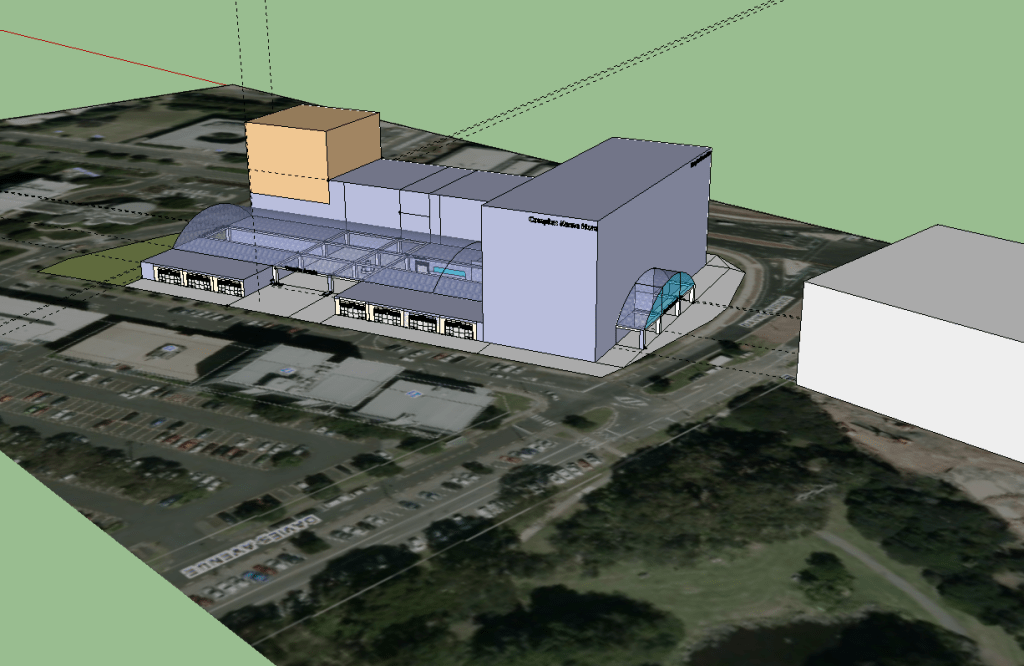
Concept Work Continues on Potential MCC Redevelopment And Someone Has Already Started Doing So From “MANUKAU CITY CENTRE – POTENTIAL FUTURE DEVELOPMENT” Manukau City Centre is arguably … Continue reading MANUKAU CITY CENTRE – POTENTIAL FUTURE DEVELOPMENT CTD
No wonder why I was asked for the Auckland public transport patronage statistics in the weekend, an article has popped up on Radio New Zealand talking explicitly about how total public transport patronage (so across all modes) is going to be something like 3.6 million under forecast for the Financial Cycle with rail making up two million of that shortfall as of current. And no I was not talking to Radio NZ, someone else had asked.
You can listen to the article here from Radio NZ
I could go into a whole spiel from what was said in the article but that is wasting pixels while I am busy with a project at the moment regarding P/T.
However if one wants a quick recap on some grumbles that cause patronage to fall out through the floor then check these two recent articles from the blog:
One last thing when listening to the radio article, see if you can pick up on why the Fare Review I mentioned in my ‘Fare Rise on Auckland Rail’ post did not become public when it was meant to. Case of oops applies in that case 😉

One Idea for Manukau City Centre’s Urban Renewal Manukau City Centre is arguably the core thus Central Business District for Southern Auckland. The area contains medium to high density … Continue reading Manukau City Centre – Potential Future Development

Off to Speak at Strategy and Finance Committee On Manukau [Updated with Committee Agenda now added] This Thursday I will be off to Town Hall to give a … Continue reading Off to Strategy and Finance Committee (Updated)
As we await the release of the Draft Unitary Plan on March 15 I would like to bring to your attention two items being sort for discussion in the Unitary Plan by Council. They are called “Sharing Land Value Uplift from Rezoning” and “Inclusionary Zoning;” of which both come under “Additional Tools for Enabling Affordable Neighbourhoods” under the Draft Unitary Plan.
Now these two options can be found from Page 67 in the embedded document below (so you might need to scroll if Scribd does not automatically go to that page):
For you homework I would like you to read these two “Additional Tools for Enabling Affordable Neighbourhoods” then post for your feedback here at BR:AKL on them.
Wikipedia also has a nice piece on Inclusionary Zoning which you can see by clicking the respective hyperlinks in red. I noticed Inclusionary Zoning is a tool from the USA while Sharing Land Value Uplift is from the UK.
However, I am currently reading it and from what I interpret so far both tools are additional taxes to middle and upper class citizens in a wealth distributing exercise for the lower and working classes here in Auckland. In effect Auckland Council is going to be coercing either directly or indirectly (through developers having to comply and as a result pass extra costs on) citizens and developers through regulations and plans to at least set aside for “affordable housing” (which is often becomes social housing) rather than do the actual opposite and liberalise our regulations and plans allowing at least developers to act more freely in providing a range of housing without costing the citizenry in Auckland.
So either you get a tax slugged on top of your rates and maybe targeted rates for whatever the Council decides to do with that money, or coerced into providing social housing at the cost of a large bulk of Auckland citizenry who end up carrying the can for this provision (rather than the State undertaking the social housing exercises via Housing NZ).
Time to delved deeper into these two new coercive and taxation regimes lurking in the Unitary Plan draft.
Remembering I stand for a more liberalised planning and provision approach to building neighbourhoods in Auckland.
Open Parachute has released their February 2013 New Zealand Blog Rankings. You can find the complete list over at “February ’13 – NZ blogs sitemeter ranking” which is compiled by Open Parachute at the beginning of a new month.
| 73 | Ben Ross: Auckland | 1987 | 3040 |
Checking back through Sitemeter February was the blog’s third best month with growth tracking well since December. This month I will be in Australia (Sydney and Brisbane) for two weeks so there will be slight interruption in commentary (plenty of holiday snaps will be uploaded however 😀 ) in Auckland issues as well as me missing the launch of the draft Unitary Plan. However as we draw closer to the elections at the end of the year BR:AKL will be for sure keeping an eye on candidates seeking our votes. Work on BR:AKL projects like the Alternative Unitary Plan, and Southern Auckland Future Growth plans will also continue; as well as keeping Auckland Transport “honest” and pushing for feedback on Sky-Path.
Oh and I do not run the blog out of a basement as Open Parachute’s picture would suggest 😛 . The main computer is actually in the living room where I can survey the entire property as well as having the phone and tablet at hand when out in the field. However changing the world – well yeah, one more step at a time 😀
Shining The Light – To a Better Papakura (OUR home)
AND
To a Better Auckland – (OUR City)
Auckland 2013: YOUR CITY – YOUR CALL
From Sitemeter
Note: Please check Open Parachute’s FAQ section on discrepancies between the above figures and the figures in their automated table
Good news folks. I had filed a Local Government Official Information and Meetings Act request to Auckland Transport on rail: punctuality, reliability, extensive patronage breakdown for the December-January period. This LGOIMA request was filed as the recent AT Statistics papers for the December 2012 – January 2013 were missing those particular figures that have been in previous statistics reports.
And go figure, guess what just got pointed to me by Auckland Transport Blog: those figures I asked for – stuck up on the AT website apparently yesterday after the meeting when not many of us would have being paying attention (The Board meeting was on Monday, today is Thursday).
Well thanks to pdfs and Scribd, here are those real figures for your inspection:
Got no idea what AT are trying to hide as while punctuality still sucks, it is actually improving slowly but surely. Only problem is those rail patronage figures are still of major cause to be of concern.
Happy Reading
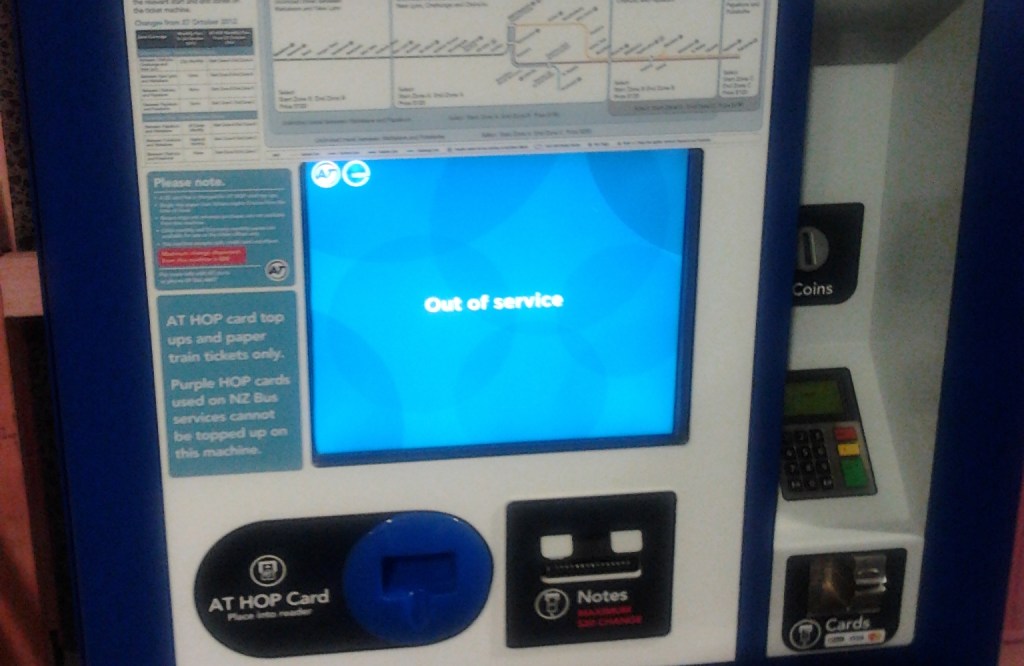
Rail Users Grumbling About AT-HOP On Stuff BR:AKL has Raised Before I picked up two particular articles rather late last night (while watching Elementary on Prime) in regards … Continue reading AT-HOP Grumbles
As AT-HOP continues to be rolled out across the Auckland public transport network (albeit late, over budget and full of bugs) I would like to remind Aucklanders of the Melbourne situation in regards to fare evasion from a similar system to ours which includes “enforcement officers.”
From The Age:
Thousands escape fare evasion fines
- Date: February 25, 2013 Adam Carey
More than 21,000 people avoided paying a fine after being booked for fare evasion on Victorian public transport system last financial year – meaning almost 11.5 per cent of fines issued were not enforced.
Figures released to the Victorian Greens and made public on Monday reveal that people who challenge an infringement notice have a better than 10 per cent chance of avoiding the fine, despite high-profile advertising campaigns warning “there is no excuse”.
“[Public Transport Minister] Terry Mulder’s whole ‘get tough, no excuses’ line on fare evasion is hollow,” Victoria Greens leader Greg Barber said.
“Ticket inspectors sometimes get it wrong. Special circumstances sometimes apply and the courts form their own view. That’s why 11.5 per cent of all tickets aren’t enforced – a pretty poor hit rate by any standards.”
AdvertisementThe figures show that 188,566 infringement notices were issued in 2011-12 and 21,674 of those were withdrawn.
Most withdrawals, 17,152, came with an official warning, with just 591 notices being withdrawn completely after being reviewed. A further 2417 fines were waived after being challenged in court.
Mr Barber said the state’s system of using patrolling authorised officers to police fare evasion was inefficient. He called for a return of tram conductors and fully staffed railway stations, not seen since the 1990s.
“It’s a pretty inefficient way to try to reduce fare evasion,” Mr Barber said.
“You’ve got to make it normal to meet a human, buy a ticket, have your ticket checked, or you’re never going to get any progress.”
A Public Transport Victoria spokeswoman said everyone was expected to have a valid ticket, but that passengers had a legal right to appeal against their fine.
“By far the most common reason for fines being withdrawn is where a passenger travelling on a concession fare has forgotten to carry their proof of eligibility,” the spokeswoman said.
“Where they can later produce proof of their concession entitlement, the fine may be withdrawn. Clear cases of fare evasion, such as those travelling with no ticket at all, will get fined and no excuse will be tolerated.”
The fine for travelling without a ticket is $207.
Public Transport Users Association president Tony Morton said last month that much fare evasion was “opportunistic” because of the lack of customer service staff on the network.
“There needs to be a full staff presence at every station from first to last train … it is simply penny-pinching to not provide that staff presence now,” Dr Morton said.
“It is no doubt that some fare evasion on the train system is opportunistic evasion that might be avoided if there was a consistent staff presence on stations and people had an idea that they might get caught.
Rather disturbing from Melbourne.
Now reading the Business Report from the February Auckland Transport Board agenda it states on page 19 that 16% to 23% of passengers travelling by rail were checked by roving Ticket Inspectors with an unknown percentage not having a valid ticket or tagged on AT-HOP card. 16% – 23% means a maximum of 6.000 individual checks done (according to the Business Report) where there is an estimate of around 30,000 passengers travelling per (week)day on the network across some 326 approximate services (Monday to Thursday, with more on Friday, and less on Saturday and Sunday). It means in technical terms that upwards of 23% of total revenue from rail passengers is protected meaning currently some 77% if total revenue if everyone paid their fare (or had a Super Gold concession) per day is at potential risk. In saying that there is safeguards at Newmarket and Britomart where you need a ticket or AT-HOP card one way or the other to get through the gate system, but the idea is to not get that far without a ticket.
77% of your revenue at risk from fare evasion – due to only 23% of all passengers being individually checked by roving Ticket Inspectors – big case of OUCH! So it begs the question would you take the risk on skipping out of your fare providing you were not passing through Britomart and Newmarket ? With those figures I quoted it would be a case of “Why Not!”
Now before anyone points fingers, I am a good citizen and tag on and off with my AT-HOP card when travelling by train – so I pay my fare as it is only fair.
What I am pointing out is that Auckland with AT-HOP has the potential issues as Melbourne does with Fare Evasion – although Melbournites face a stiffer penalty at $207 (Australian) and a higher chance of getting caught. Our poultry “penalty” fare is $10.30 and moves to $20 next month – however this limitation is due to legislation issues currently being sorted to address.
We also have the two issues with AT-HOP of: lack of customer service, and the reliability of Rail Ticket Machines and Tagging Posts (I usually do a post every fortnight on the machines breaking down over the weekends). I will write separate posts on these in due course however, those issues do not really inspire confidence in the public transport ticketing system to the point they could act as a catalyst to fare evade.
So a warning from Melbourne and another LGOIMA request to go fill out.
I wonder if “we” are taking in the lessons learned from our cousins in Australia?
 Talking Southern Auckland