Actual Alternative to Betterment Taxes Proposed by Council? Recently I had written a post on basically what is a new round of taxes better known in slang as Betterment … Continue reading It is all about the MUD
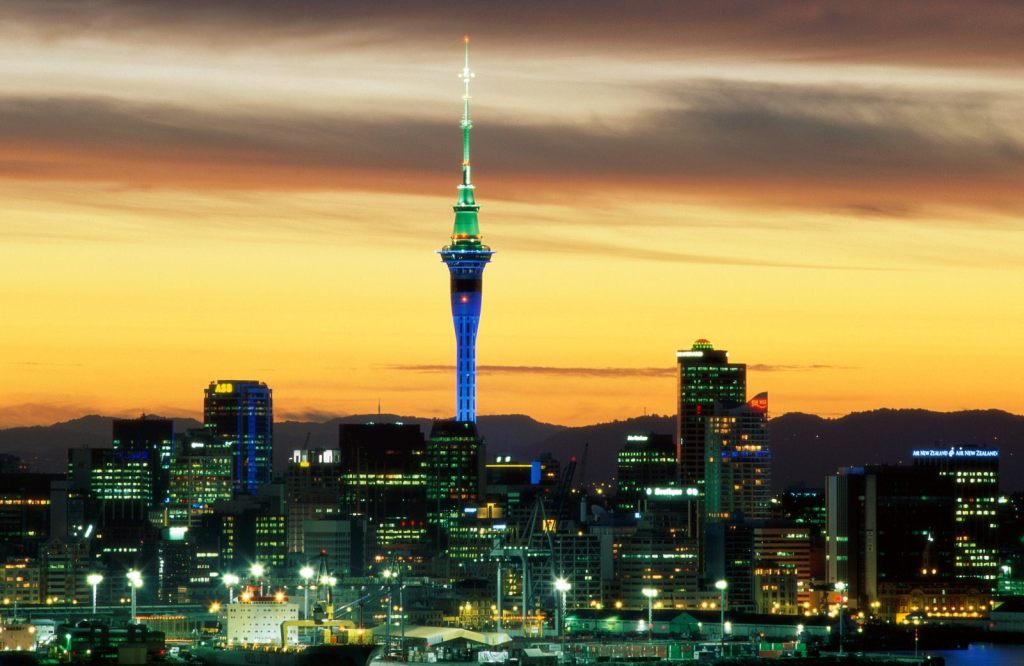
An issue causing hot discussion either here in the blog or in the wider community
Actual Alternative to Betterment Taxes Proposed by Council? Recently I had written a post on basically what is a new round of taxes better known in slang as Betterment … Continue reading It is all about the MUD
No wonder why I was asked for the Auckland public transport patronage statistics in the weekend, an article has popped up on Radio New Zealand talking explicitly about how total public transport patronage (so across all modes) is going to be something like 3.6 million under forecast for the Financial Cycle with rail making up two million of that shortfall as of current. And no I was not talking to Radio NZ, someone else had asked.
You can listen to the article here from Radio NZ
I could go into a whole spiel from what was said in the article but that is wasting pixels while I am busy with a project at the moment regarding P/T.
However if one wants a quick recap on some grumbles that cause patronage to fall out through the floor then check these two recent articles from the blog:
One last thing when listening to the radio article, see if you can pick up on why the Fare Review I mentioned in my ‘Fare Rise on Auckland Rail’ post did not become public when it was meant to. Case of oops applies in that case 😉

One Idea for Manukau City Centre’s Urban Renewal Manukau City Centre is arguably the core thus Central Business District for Southern Auckland. The area contains medium to high density … Continue reading Manukau City Centre – Potential Future Development

Off to Speak at Strategy and Finance Committee On Manukau [Updated with Committee Agenda now added] This Thursday I will be off to Town Hall to give a … Continue reading Off to Strategy and Finance Committee (Updated)
As we await the release of the Draft Unitary Plan on March 15 I would like to bring to your attention two items being sort for discussion in the Unitary Plan by Council. They are called “Sharing Land Value Uplift from Rezoning” and “Inclusionary Zoning;” of which both come under “Additional Tools for Enabling Affordable Neighbourhoods” under the Draft Unitary Plan.
Now these two options can be found from Page 67 in the embedded document below (so you might need to scroll if Scribd does not automatically go to that page):
For you homework I would like you to read these two “Additional Tools for Enabling Affordable Neighbourhoods” then post for your feedback here at BR:AKL on them.
Wikipedia also has a nice piece on Inclusionary Zoning which you can see by clicking the respective hyperlinks in red. I noticed Inclusionary Zoning is a tool from the USA while Sharing Land Value Uplift is from the UK.
However, I am currently reading it and from what I interpret so far both tools are additional taxes to middle and upper class citizens in a wealth distributing exercise for the lower and working classes here in Auckland. In effect Auckland Council is going to be coercing either directly or indirectly (through developers having to comply and as a result pass extra costs on) citizens and developers through regulations and plans to at least set aside for “affordable housing” (which is often becomes social housing) rather than do the actual opposite and liberalise our regulations and plans allowing at least developers to act more freely in providing a range of housing without costing the citizenry in Auckland.
So either you get a tax slugged on top of your rates and maybe targeted rates for whatever the Council decides to do with that money, or coerced into providing social housing at the cost of a large bulk of Auckland citizenry who end up carrying the can for this provision (rather than the State undertaking the social housing exercises via Housing NZ).
Time to delved deeper into these two new coercive and taxation regimes lurking in the Unitary Plan draft.
Remembering I stand for a more liberalised planning and provision approach to building neighbourhoods in Auckland.
Good news folks. I had filed a Local Government Official Information and Meetings Act request to Auckland Transport on rail: punctuality, reliability, extensive patronage breakdown for the December-January period. This LGOIMA request was filed as the recent AT Statistics papers for the December 2012 – January 2013 were missing those particular figures that have been in previous statistics reports.
And go figure, guess what just got pointed to me by Auckland Transport Blog: those figures I asked for – stuck up on the AT website apparently yesterday after the meeting when not many of us would have being paying attention (The Board meeting was on Monday, today is Thursday).
Well thanks to pdfs and Scribd, here are those real figures for your inspection:
Got no idea what AT are trying to hide as while punctuality still sucks, it is actually improving slowly but surely. Only problem is those rail patronage figures are still of major cause to be of concern.
Happy Reading
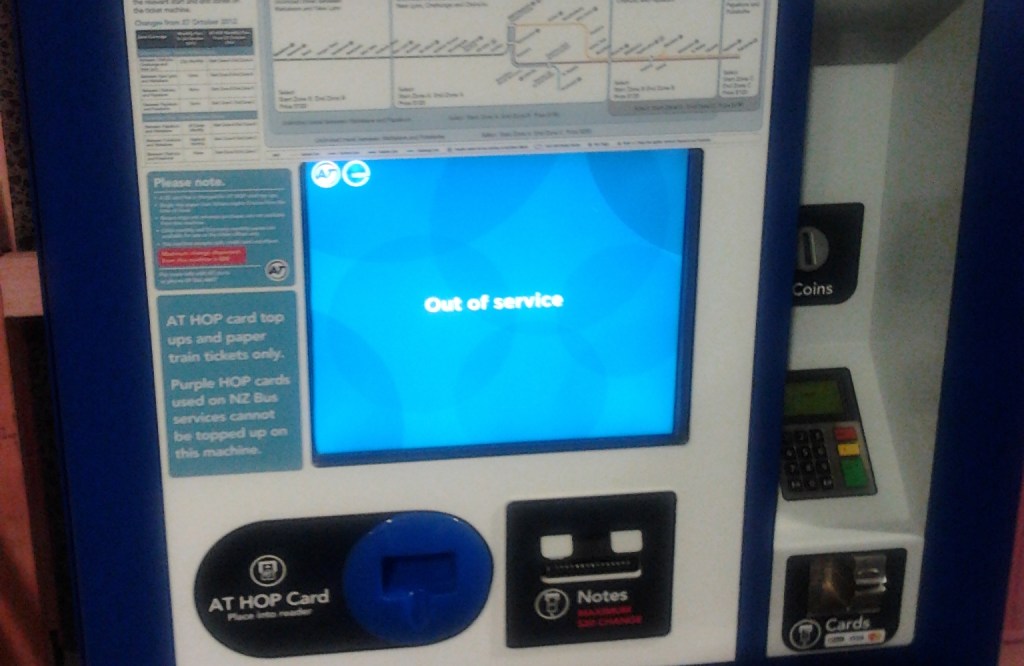
Rail Users Grumbling About AT-HOP On Stuff BR:AKL has Raised Before I picked up two particular articles rather late last night (while watching Elementary on Prime) in regards … Continue reading AT-HOP Grumbles
I love Brisbane and am going back there for a holiday in the middle of March. Brisbane is my second home and where I lived for two years as part of my err “gap-year.” Brisbane is also similar in some respects to Auckland in regards to its civic structure, urban fabric, transportation systems, and political stupidity in investing in the wrong project.
Now I did just say political stupidity – and why is that? Check these two pieces from NZ and Brisbane on Public Private Partnerships (PPPs) not delivering as they were meant to:
Stephen King: PPPs need better ways to handle risk
5:30 AM Tuesday Feb 26, 2013
As another toll road in Australia fails, what is the future for public-private partnerships?
Instead of taking traffic off congested suburban roads, high tolls may mean too few cars use the toll road. Photo / APNIs there a future for privately funded toll roads? BrisConnections has been placed into administration only seven months after opening the Brisbane Airport Link toll road/tunnel. It has not had sufficient users to make the project viable. So what does this mean for future public-private partnerships (PPPs)?
In the short term, it will mean very little. The citizens of Brisbane have a great tunnel that (from my experience) cuts significant time off a trip to the airport. The investors have done their dough. And there may be various lawsuits about who misled whom.
However, this is the fourth in a series of PPP toll road failures, including Sydney’s Lane Cove and Cross City tunnels, and Brisbane’s Clem7. If PPPs are to have a future, we need better ways to handle the project risk.
The risk associated with large infrastructure projects can be significant. For toll roads, the viability of a project depends on projections of future traffic flows. But these flows may be highly variable, depending on a range of choices by the government and car users
…
You can read the rest over at the Herald website
Now what Mr King was referring to in regards to PPP failure and by virtual extension political stupidity in Brisbane is this Brisbane Times piece I Facebooked not so long ago:
From Brisbane Times:
Airport Link in administration
- Date February 19, 2013 Bridie Jabour
Brisbane’s Airport Link tunnel has gone into voluntary administration. Photo: Harrison Saragossi
UPDATED
The $4.8 billion Airport Link tunnel has been placed into voluntary administration.
In an announcement to ASX, tunnel’s operator BrisConnections said the company had decided to place the tunnel into administration citing low traffic levels and debts worth more than the tunnel.
The board of BrisConnections entered negotiations in November to restructure the tunnel’s debt but on Monday night, the board was told lenders were not prepared to support any of the restructure proposals.
The latest traffic figures show an average of 47,802 vehicles using the 6.7 kilometre Airport Link each day, about half of the original forecasts which had daily traffic of 90,000 vehicles.BrisConnection conceded in the ASX statement that an extensive marketing and phased-in toll regime had failed to attract enough traffic but Non-Executive Chairman Trevor Rowe was still positive about the future of the tunnel.
‘‘It’s disappointing that the board has to reach this decision,’’ he said.
‘‘The AiportlinkM7 is unquestionably a world class piece of transport infrastructure that will continue to support Brisbane’s growth into the decades ahead.’’
BrisConnections was placed into a trading halt in November and two board directors resigned after a dismal report to the ASX on Airport Link.
In the report, the company admitted for the first time the tunnel’s debt might be more than its value and a research analyst said at the time the most likely option for the Airport Link was to put it up for sale.
The tunnel had a toll free period which ended in October last year with traffic forecasts falling tens of thousands of vehicles short even when the ride was free.
The costs of building Airport Link blew out so much for construction company Leighton Holdings that it contributed to them posting a yearly loss of more than $200 million which has been turned around to a $450 million profit since it handed over the tunnel and its other high profile troubled project, the Victorian desalination plant.
Airport Link was opened in July 2012 and connects Brisbane’s northern suburbs with Brisbane’s CBD and the airport, the Clem7 and the Inner City Bypass.
The tunnel will remain open and available to users as normal.
Airport Link is the second Brisbane tunnel to financially collapse with the operator of Clem7, RiverCity Motorway Group, going into receivorship in November with $1.3 billion worth of debts.
News of Airport Link’s collapse forced Brisbane Lord Mayor Graham Quirk to defend Brisbane City Council‘s decision to push ahead with the city’s third toll tunnel, the $1.5 billion Legacy Way tunnel
The Brisbane saga should sound a warning to both Central Government who are ploughing on with the Wellington Transmission Gully Motorway – which is a PPP (the Herald article above mentions the risks of that as well) and our Auckland Council if we consider PPPs for some of our larger projects including the City Rail Link.
I have called for a PPP with the City Rail Link with our public authorities handing the tunnel construction and maintenance, while having private companies operate the stations for say 50 years providing they get the rights for urban development (including sky rights) in the immediate vicinity of stations as part of a wider investment program. Now I know in Tokyo’s railway has stations that are built and run by companies basically on behalf of the rail metro line and in the same token have developed often impressive complexes of residential, commercial office and commercial services (retail, malls, hotels) above and around the said station.
These impressive complexes allow the Tokyo authorities to share some of the costs of rail metro line station building with private companies in return for pretty much guaranteed patronage due to the urban complexes built above and around the stations.
So there are cases where PPPs for in this case with Tokyo – rail can work. This could be a very good example for Auckland to follow-up on when the CRL is being built. However the Brisbane and Transmission Gully Wellington Road PPP projects (go figure – I said roads) are also examples on what NOT to do with PPPs.
So Auckland (including AT and Council) still have a long and hard road ahead in plausible financial planning for some of our larger mega-projects like the much needed City Rail Link. On one side it could go extremely wrong and bankrupt the city, on the other we get an golden opportunity for a needed transit link and some actual world class urban renewal in our grey and drab CBD!
Food for thought
Update on Auckland Transport and Possible Rail Fare Movements On Monday in the “FARE RISE ON AUCKLAND RAIL?” post I had alerted to the fact Auckland Transport were preparing … Continue reading FARE RISE ON AUCKLAND RAIL?
Southern Initiative Stalled However? As mentioned in the “UNITARY PLAN READY FOR THE COMMUNITY” post, the Draft Unitary Plan comes out for informal feedback on March 15 (while I happen … Continue reading Southern Initiative and The Unitary Plan
 Talking Southern Auckland