Tag: Auckland Transport

Congestion Free Network Idea Gaining Traction

Campbell Live Reports


And so for an entire 30 minutes last night, New Zealand got a Campbell Live show dedicated to one of the biggest issues in New Zealand. No it is not the GSCB (yawn) and no it was not about taxation (per se). It was about transport – the nation’s artery system for moving goods and people around that is not in a great state right now.

This would be owing to lack of proper investment in our transport network or Government investing in the wrong areas of the transport equation. Yes I am referring to the Holiday Highway up at the north end of Auckland.


However, I digress. Take a look at the full Campbell Live segment on the Congestion Free Network idea here:

The Congestion Free Network proposal


Might as well add the Manukau South Link to that CFN map. I know ATB does not think much of the particular link in itself however, that piece of infrastructure is a virtual go from Auckland Transport once the business case study is reported back late this year. The only thing that can effectively stop the Link from being built is not Port of Auckland’s Wiri Facility but rather politics in itself from Council or NIMBY‘s.


If one is also wondering why Auckland Transport and the Office of the Mayor are rather silent on the Congestion Free Network idea I did go send off some enquiries to both.

Auckland Transport have noted the CFN and will take a look at whether parts could be incorporated into the 2015 Integrated Transport Plan. That draft ITP is not due out for consultation until next year and will be heavily influenced by the Council master budget document – the 2015 Long Term Plan.

I also received a reply in brief from the Mayor’s office as well on the Congestion Free Network. A response is coming on the CFN queries I made under the “media” arm of my consultancy business (TotaRim Consultancy Limited) and should be with me soon. Once I have the response I will run commentary on it.


As mentioned in other posts, I support what Transport Blog and Generation Zero are trying to do in bringing Auckland forward into the 21st Century. It is by no means perfect nor pretty but, it is sure as better than what is in the 2012 Integrated Transport Plan.


Congestion Free Network = a #movingauckland which = a #BetterAuckland


The Push for a #MovingAuckland

Generation Zero Writes


(In the Herald that is)

And so an “opinion” piece crops up in today’s Herald on Auckland Transport Blog and Generation Zero’s Congestion Free Network alternative – a proposal TotaRim Consultancy Limited supports.

The piece in the Herald today is fitting with ATB due to give a technical presentation to the IPENZ transport chapter at the old Auckland Regional Council (now BECA) building tonight. I have RSVP’ed to the event tonight and will be in attendance observing the presentation. Commentary will follow tomorrow on the presentation.

The following opinion piece written by Generation Zero leader (one of many) Sudhvir Singh opens as follows:

Sudhvir Singh: Generation Zero’s transport vision

Adding more services to public system will encourage Aucklanders to use it, writes Sudhvir Singh.


The Auckland city rail loop is one step towards a balanced transport system.

EXPAND
The Auckland city rail loop is one step towards a balanced transport system. Credit: NZ Herald

Auckland’s transport plan provides us with a once-in-a-generation choice between two competing visions: to keep pursuing the failed model of motorway-driven sprawl, or to develop a quality, compact city with a balanced transport system.


Generation Zero, with the respected authors of Auckland Transport Blog, have developed a fully costed, visionary alternative to the current $60 billion transport plan: the Congestion Free Network.


We propose the staged investment in public transport corridors all over the region, with high frequency all-day services. These corridors would include electrified rail to Mt Roskill and Pukekohe, busways to Silverdale, Kumeu and Botany, rail to the airport, light rail along Dominion Rd, an extensive ferry network and even rail to the North Shore. And all of this at only 40 per cent of the cost of the current transport plan.


A full regional cycling network would complement this system, as well as focused upgrades on specific local roads. This would provide Aucklanders with genuine transport choice.


By contrast, the council’s current plan to deal with Auckland’s growth over the next 30 years is set out in its Integrated Transport Programme (ITP)…

You can read the rest of it over at the Herald site.


I did though tail off that excerpt with the mention of the current 2012 Integrated Transport Program that I have written off before and even called it a lemon.

Through that short reaction alone you can see why I would support a #MovingAuckland as part of a #BetterAuckland via the Congestion Free Network idea.

Bold, visionary, sorely needed and a gut-ser (in the mountain of NIMBYism from my parents’ generation (the main but not only source) as well as Right Wing sources that will soon come up against the CFN concept) needed for Auckland. I applaud what is being advanced here.


I have sort responses from Auckland Transport and the Office of the Mayor on the Congestion Free Network proposal. Responses have come back from Auckland Transport on the CFN idea.

Basically in regards to the city and its transport, any CFN concepts are most likely to be further researched and incorporated (whether in parts or as a whole) into the 2015 Integrated Transport Program. The 2015 ITP draft is due out for release for “our” consideration and consultation this time next year.

As for the Office of the Mayor, a response is on its way.


And so like #SuperManukau, the Congestion Free Network idea ( #movingauckland ) works its way slowly through the wheels and cogs of Town Hall.


More as it happens


Mill Road – South End Concerns

Auckland Transport Preparing for Investigation


After the recent uproar over the proposal for the Redoubt Road and Mill Road (north end) widening, attention now switches to the southern end of the Mill Road Corridor Project with Auckland Transport preparing an investigation into it.

The Mill Road Corridor Project is essentially creating a 4-lane south-eastern bypass route from Redoubt Road, down Mill Road, through east Papakura before finally connecting at Drury near the motorway interchange. The purpose behind this bypass is to allow for growth in the East Takanini and Papakura area, as well as an alternative to the Southern Motorway between Manukau and Drury (currently congested in peak hour).

Currently owing to the congestion on that section of Southern Motorway, there is a lot of rat running along Redoubt Road and Mill Road as workers head south to head home.

From Papakura Courier

Mill Road decision looms 

DUBBY HENRY


Homeowners in “limbo” over the controversial Mill Rd corridor could soon find out if they’re in the firing line.

The contract to investigate the second stage of the highway goes to tender in August.


The arterial traffic route is an alternative to State Highway 1 and will link Manukau and Flat Bush to Drury and the southern motorway through Papakura.

Planners will pick up where the Papakura District Council left off its investigations in 2010 but the routes are far from finalised, Auckland Transport spokesman Mark Hannan says.


The district council held meetings in 2009 with residents who were worried their houses could be bowled.

But it’s “too early to tell” if those same residents will still be in the path of development, Mr Hannan says.


The most likely route will head down Cosgrave Rd before doglegging around Cosgrove School and cutting through farmland to link with Dominion Rd, which is expected to be widened from two lanes to four.

The corridor is about 1.2km east to where I live and could cause rat running down the main road if people decide to use that as a bypass to Papakura or even the motorway via Elliot Street. The rat running would be a pain for myself trying to get to and from Papakura or the Papakura Train Station (until Glenora was built) so I am keeping an eye on this part of the corridor’s development.

From the Papakura Courier article again

After Dominion Rd the route will cut through Hunua Rd along several possible routes through Drury to get to the southern motorway, meaning residents around Waihoehoe and Fitzgerald roads could also see their properties affected.

I would see that part as the main feeder for the upcoming Drury South Industrial Park as trucks would use it to gain access to State Highway One

And he reckons it doesn’t make sense to create what will essentially be a second motorway on his street now the Government has announced it is to widen State Highway 1.

That would be true. Apart from maybe Hunua Road to State Highway One (so the southern most end) the rest of the project should probably be reviewed in light of the Southern Motorway upgrades.

Those upgrades which include the dogged Takanini Interchange should take a lot off pressure off that area. Putting the need for a 4-lane bypass back on the shelf and relieving some concerns for local residents. Sure Mill Road will need kerbing, intersection improvements, cycle lanes and maybe a bus lane or two but; not the full hog as we are seeing now.

The investigation is expected to take two years and there will be “full consultation” with residents, he says.


We all hold our collective breaths here folks

First Critique of a Candidate

It Pays to do One’s Homework when “One” is Paying Attention


And yes I (and others as Twitter lights up) am paying attention at the moment thanks to Orsman’s Tweet yesterday on Palino and Transport.

And so Orsman has written his piece about mayoral candidate John Palino and his transport “ambitions” for Auckland. The back part was good as anyone with half a brain attached would know that the current Integrated Transport Program Mayor Len Brown pigeon holed Auckland and Auckland Transport into is an utter joke. How can someone spend $65 billion with a $12 billion funding gap on transport solutions that make congestion worse in 20-30 years? Not very intelligent stuff here – especially as Car Capital City Detroit just went bankrupt this morning.

As for the rest of the article? Well it might either show bad advice or plain laziness to go suss the situation out proper before dropping a comment in the NZ Herald.

The Herald article is somewhat a scatter gun here so I will try to make top and tail of it best I can.

From the NZ Herald

Candidate favours park-and-ride

By Bernard Orsman @BernardOrsman

John Palino wants to take pressure off transport network and make it easier for commuters to leave cars

Building park-and-ride facilities is the first transport priority for Auckland mayoral candidate John Palino, whose long-term solution is to build satellite centres where people can live, work and play.


Speaking ahead of his campaign launch tomorrow, Mr Palino told the Heraldthat Auckland must make the most out of rail electrification, saying park-and-ride facilities are the quickest, cheapest and most practical way to relieve pressure on the city’s transport network.


As I am debating with ATB’s resident socialist Patrick Reynolds, Park and Rides do have their uses. Typically in the outlying stations such as Papakura and Pukekohe where the stations serve a dispersed rural and urban population. While feeder buses and active transport can serve up to a 1.6km radius from the said station, the Park and Ride can serve a catchment 10x the distance which is what rural based commuters would do. So Park and Rides can have their uses.

As for cheapest method mentioned by Palino – err okay?

From the article again

“Let’s stop trying to get people out of their cars completely when it doesn’t suit them, and just make it easier for them to take public transport.


“I will subsidise parking where cost-benefit analysis shows park-and-rides provide a positive impact on the transport network.”


He said park-and-ride facilities might have to be multi-storey and cost between $20,000 and $40,000 per space.

That is some expensive parking. I would be inclined to charge Park and Ride users $2-$4 a day and have an option where you could use your AT-HOP card to “tag in and out” of the PnR.

As for making easier to get to the train station; AT is already ahead in that game as they prepare for the first time feeder buses into major stations and bus interchanges. Some new interchanges like Otahuhu are on the cards as well. So it will be easier to get public transport once the new interchanges and feeders are fully working.


“If we are ever to have the city rail project, we’re going to have to get the patronage required to justify spending ratepayer money,” he said.


That line suggests someone has not either done their homework or is in fact being lazy in obtaining the required information. How hard is it to send and email, make a phone call and have a coffee with people in the actual know behind the CRL and growth targets – the people being AT themselves. Oh and not reading the Prime Minister’s speech properly does not help either as he did lay down the challenge.

FFS doing my own reading and coffee sessions with those in the know I discovered that to bring the CRL forward all AT really need to do is show strong growth above a set percentage year in year out towards 2020. If Auckland Transport can do this then we might just see the first dirt sod turned around the 2017-18 mark.

And yes AT are putting in some strong initiatives from 2014 to make that growth happen to the point I can display confidence in them doing it.


And for this from Palino:

• Long term, build new satellite centres.

That is already on its way via the Unitary Plan through the Metropolitan Centres and twin Satellite Towns of Pukekohe and Warkworth. Although in saying that some polishing needs to occur first there before the Unitary Plan becomes operative.

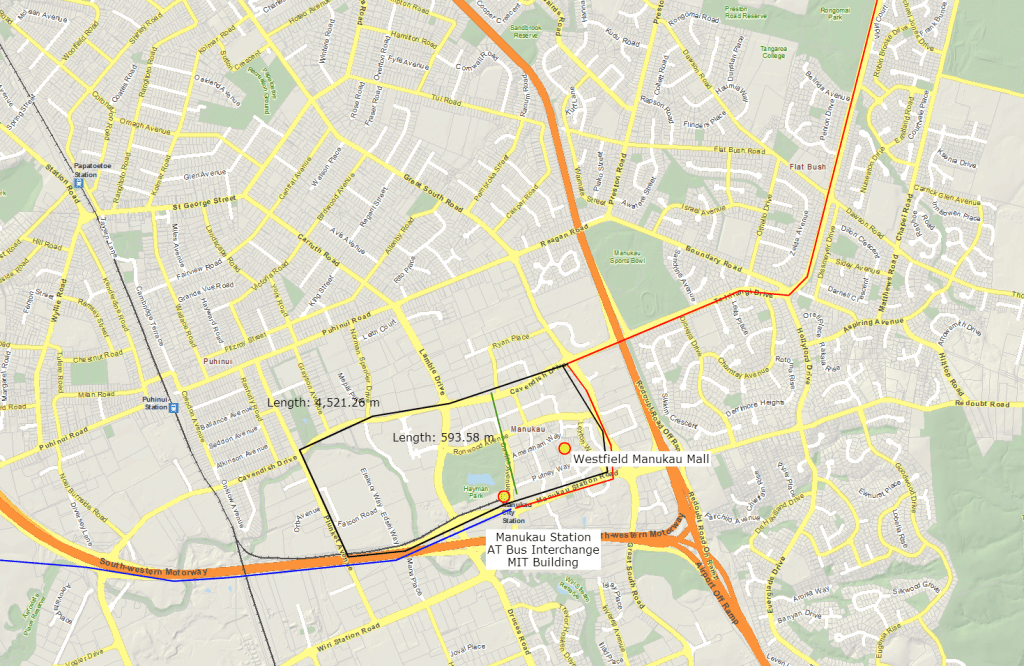
As for Manukau, advances continued to be made there quietly behind the scenes as Auckland’s first Super Metropolitan Centre is drafted then brought into existence.


Coverage of the Local Government Elections 2013 will continue as development happen.


It’s About the Jobs – Again

Strong Economic Growth – Just not where it is needed


A release from Auckland Council‘s Chief Economist today on how the Auckland economy continues to do rather well:

Auckland’s housing market boosting wider economy
 
 
Strong house price growth across the Auckland region is boosting other parts of the economy including construction, finance and real estate industries, according to latest economic figures for the region in the first three months of this year.
 
Economic activity is now more sustained and broad based, with 17 out of 20 sectors recording gains in the quarter. Auckland grew at a rate of 3.2 per cent in the year to March; along with Christchurch, these two cities are underpinning growth across the country, said Geoff Cooper, Auckland Council’s chief economist. Mr Cooper said activity in Auckland’s construction, finance and property sectors will likely spill over into other parts of the region’s economy, and with time, other areas of New Zealand.
 
“Auckland house prices continue their upward march, which is buoying consumer confidence and further stimulating demand,” Mr Cooper wrote in the latest Auckland Economic Quarterly, released today.
 
“We’re already seeing a pick-up in activity across the finance, property and real estate and construction services sectors. As building work gathers pace, it will act as a catalyst for growth in various downstream sectors, particularly domestic manufacturing and retail.”
 
The median Auckland house price was $562,000 in March 2013, up 12.5 per cent from March last year. Signs that migration is rebounding, amid the slowing Australian economy, are likely to support house prices in the medium term.
 
Some 4,764 residential building consents were lodged with Auckland Council in the 12 months ended March 31 this year. While that’s down from the 10-year average of 6,631, it is up from the year-earlier figure of 3,976. This represents the early stages of a construction upswing in Auckland, which will need to continue before house prices ease.
 
Auckland’s consumers are among the most optimistic in New Zealand, spurred on by activity in the housing market. Westpac McDermott Miller reports a consumer confidence score of 119.0 for Auckland, well ahead of the national average of 110.8, and up 13.7 per cent from Q1 of last year. Retail sales rose 1.1 per cent from the final three months of 2012, and new car registrations increased again to just shy of the 10-year average.
 
Still, lack of job growth continues to weigh on Auckland’s recovery as unemployment remains high at 7.3 per cent. With business employment intentions in positive territory and economic activity looking more sustained, job seekers have more reason for optimism in the year ahead.

—–ends—–


Okay some renewed strength in the house building sector is good as that will get the supply up. Although still not fast enough for sustained Unitary Plan levels if the population growth remains to be high.

The issue though is emphasised in red although the rest in black could be good news if job growth increases..

However, this shows the crucial nature to which the Unitary Plan needs to get right on employment centres. Those main centres being our City Centre, (Super and) Metropolitan Centres, heavy and light industry, and supported by good Town Centres.


Forget focusing on you house and everything within 25 metres around it like our NIMBY‘s and shills are. Attention needs to focus on our higher end commercial and industrial centres to make sure the land and infrastructure is in position so that entrepreneurs like me can create jobs.

With the failure that was the Consensus Building Group just announcing their report on transport funding over the life of the current Integrated Transport Program; I believe emphasis will be placed on a more decentralised front with employment centres. Decentralised like running two CBD’s and multiple industrial centres so that people have the option live local and work local rather than cross city commute or funnel into one point as the mayor wants.

i will work up the plan and subsequent language around Manukau, Wiri and Southern Auckland and its potential development front through the life of the Unitary Plan as part of ongoing work in this area.

If we need jobs and our transport boffins are rather inept on getting Auckland moving (and no, Auckland Transport are absolved of this. They are the ones who need to carry this all out) the we better look for some alternatives quick


The CBG Final Report