Tag: Public Transport

The Last Year on Auckland’s Transport

Information Dump on the Previous 12 Months with Auckland‘s Transport


Will all the noise at the moment around The Congestion Free Network proposal AND the national transport issues thanks to Campbell Live last night, it might be a good idea to do an information dump on the 2012/2013 (July-June) cycle in regards to Auckland’s transport.

That is all transport in Auckland that is dealt with by Auckland Transport which excludes the State Highway network which is looked after by NZTA. So before anyone decides to have a moan about State Highway’s One and 16 and how much AT sucks there – err go learn something and actually bug NZTA. Auckland Transport have no jurisdiction over our State Highways…


The Information Dump

I have four attachments from the June 2013 Auckland Transport Board papers that the AT Board met over yesterday. You can find the agenda and full list of attachments HERE. What is embedded below were the relevant issues around Auckland’s transport especially in light of Campbell Live’s piece last night

Public Transport Monthly Patronage – June 2013


Monthly Transport Indicators


Auckland Transport Monthly Transport Indicators (Chart Form)

Just a note on two points in that document from previous enquiries I have made on two particular topics:

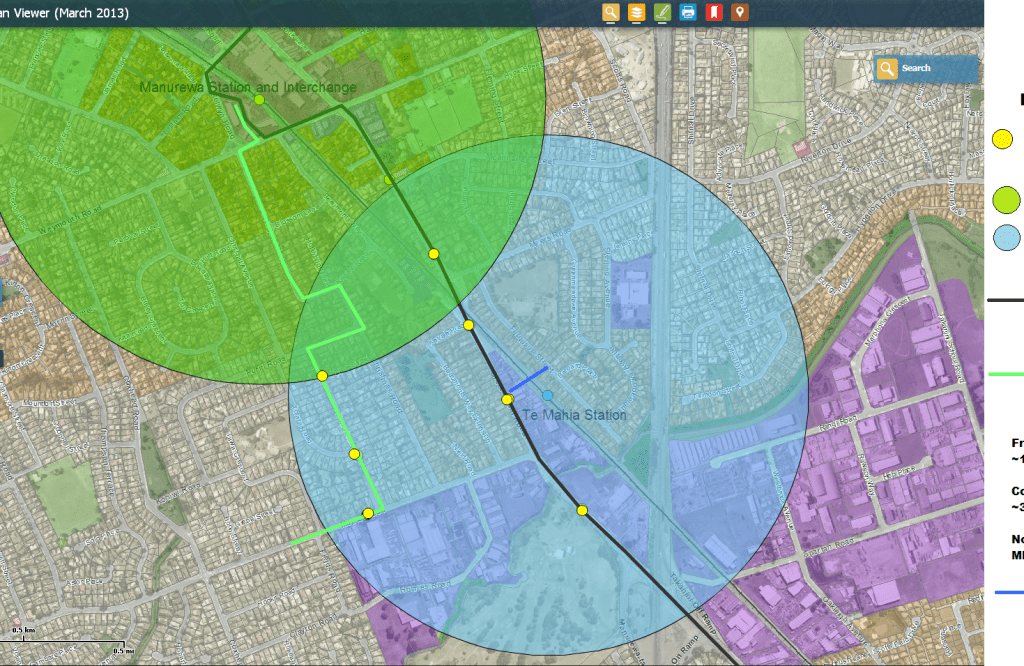
  • Glenora Road Station: Requires a Business Case Study to be conducted on the station before 2015. If Business Case study is good and Te Mahia Station is closed, then the station will be advocated to be brought into the 2015 Integrated Transport Program. Depending on the 2015 Long Term Plan funding the station could be operational by end of 2018.
  • Manukau South Link: Business Case and Operations Study under way with an estimate report back due late this year. In light of enquiries made AT see no particular reason why the South Link should not be built and operated at a set frequency from Pukekohe to Manukau via that link. In regards to POAL‘s Wiri Facility, no major issue per se but, I did make enquiries about the feasibility of shifting the facility down the road. POAL are looking into this.


Statistics Report –  June 2013


And so lets see what the 2013-2014 year brings in regards to Auckland’s Transport system and its users.


First Critique of a Candidate

It Pays to do One’s Homework when “One” is Paying Attention


And yes I (and others as Twitter lights up) am paying attention at the moment thanks to Orsman’s Tweet yesterday on Palino and Transport.

And so Orsman has written his piece about mayoral candidate John Palino and his transport “ambitions” for Auckland. The back part was good as anyone with half a brain attached would know that the current Integrated Transport Program Mayor Len Brown pigeon holed Auckland and Auckland Transport into is an utter joke. How can someone spend $65 billion with a $12 billion funding gap on transport solutions that make congestion worse in 20-30 years? Not very intelligent stuff here – especially as Car Capital City Detroit just went bankrupt this morning.

As for the rest of the article? Well it might either show bad advice or plain laziness to go suss the situation out proper before dropping a comment in the NZ Herald.

The Herald article is somewhat a scatter gun here so I will try to make top and tail of it best I can.

From the NZ Herald

Candidate favours park-and-ride

By Bernard Orsman @BernardOrsman

John Palino wants to take pressure off transport network and make it easier for commuters to leave cars

Building park-and-ride facilities is the first transport priority for Auckland mayoral candidate John Palino, whose long-term solution is to build satellite centres where people can live, work and play.


Speaking ahead of his campaign launch tomorrow, Mr Palino told the Heraldthat Auckland must make the most out of rail electrification, saying park-and-ride facilities are the quickest, cheapest and most practical way to relieve pressure on the city’s transport network.


As I am debating with ATB’s resident socialist Patrick Reynolds, Park and Rides do have their uses. Typically in the outlying stations such as Papakura and Pukekohe where the stations serve a dispersed rural and urban population. While feeder buses and active transport can serve up to a 1.6km radius from the said station, the Park and Ride can serve a catchment 10x the distance which is what rural based commuters would do. So Park and Rides can have their uses.

As for cheapest method mentioned by Palino – err okay?

From the article again

“Let’s stop trying to get people out of their cars completely when it doesn’t suit them, and just make it easier for them to take public transport.


“I will subsidise parking where cost-benefit analysis shows park-and-rides provide a positive impact on the transport network.”


He said park-and-ride facilities might have to be multi-storey and cost between $20,000 and $40,000 per space.

That is some expensive parking. I would be inclined to charge Park and Ride users $2-$4 a day and have an option where you could use your AT-HOP card to “tag in and out” of the PnR.

As for making easier to get to the train station; AT is already ahead in that game as they prepare for the first time feeder buses into major stations and bus interchanges. Some new interchanges like Otahuhu are on the cards as well. So it will be easier to get public transport once the new interchanges and feeders are fully working.


“If we are ever to have the city rail project, we’re going to have to get the patronage required to justify spending ratepayer money,” he said.


That line suggests someone has not either done their homework or is in fact being lazy in obtaining the required information. How hard is it to send and email, make a phone call and have a coffee with people in the actual know behind the CRL and growth targets – the people being AT themselves. Oh and not reading the Prime Minister’s speech properly does not help either as he did lay down the challenge.

FFS doing my own reading and coffee sessions with those in the know I discovered that to bring the CRL forward all AT really need to do is show strong growth above a set percentage year in year out towards 2020. If Auckland Transport can do this then we might just see the first dirt sod turned around the 2017-18 mark.

And yes AT are putting in some strong initiatives from 2014 to make that growth happen to the point I can display confidence in them doing it.


And for this from Palino:

• Long term, build new satellite centres.

That is already on its way via the Unitary Plan through the Metropolitan Centres and twin Satellite Towns of Pukekohe and Warkworth. Although in saying that some polishing needs to occur first there before the Unitary Plan becomes operative.

As for Manukau, advances continued to be made there quietly behind the scenes as Auckland’s first Super Metropolitan Centre is drafted then brought into existence.


Coverage of the Local Government Elections 2013 will continue as development happen.


Informative Open Day from AT

You Should Go to One


I went to the Auckland Transport Open Day this morning in Papakura (while Rebekka was at the library) to have a nosy and ask some questions. On the cards was:

  • Bus Routes 365 and 371
  • Te Mahia Station being closed (which I support)
  • The Manukau and Otahuhu Transport Interchanges

(Note this was different to the status I gave on Facebook)

So I rocked up, signed in, got the notebook, started taking some nots, and asked some questions to the very helpful attendants. Oh and I got a brochure too so I can pass it to someone else for a read.

Overall I was there for 30mins and was worth it. I highly recommend rocking up to one and going yourself. These are the open days for the Southern Network:

From the AT Website

Open Days

To give Aucklanders the opportunity to ask any further questions in person and learn more about what the New Network will involve, we’re holding Open Days across South Auckland during the consultation period. Come along to an Open Day near you.

  • Saturday 13 July at Papakura Crossroads Church, 25 Broadway from 10am to 5pm
  • Monday 15 July at Manurewa Library, 7 Hill Road from 10am to 7pm
  • Tuesday 16 July at Mangere-Moana-nui-a-Kiwa Leisure Centre, 14 Waddon Place from 12pm to 7.30pm
  • Wednesday 17 July at Papatoetoe Town Hall, 5 St George St from 10am to 8pm
  • Thursday 18 July in the Manukau Room, Auckland Council Civic Building, 31 Manukau Station Road from 10.30 to 8pm
  • Saturday 20 July at the Otara Market (community centre), Newbury St from 7am to 4pm
  • Thursday 25 July at the Otahuhu Recreation Centre, Fairburn Reserve, 30 Mason Ave from 10am to 7.30pm
  • Saturday 27 July at the Onehunga Community Centre, Jackson & Yates Rooms, 83 Church St from 10am to 5pm

…..


Before I sign off I will repost AT’s FAQ around this as it should be compulsory reading before going along – it does answer some of the obvious

From AT again

New Network for the SouthQ&A with Anthony Cross, Auckland Transport’s Public Transport Network Manager

Q: How is the submission process going?

A: We’re tracking well with more than 500 submissions already received. Overall feedback has been favourable of the change. There are of course some routes and proposals that have captured people’s interest, which is fine and what we have been expecting.

We’re aiming to create a network that is both useful and convenient for more people in South Auckland. We hope to improve on it with the public’s input.

Q: Do you have any advice for people sending in submissions?

A: Yes, please be as detailed as possible to ensure we can identify your desired changes. For example, changing the XX route to go down XX road is more helpful than saying don’t like the new route. Or the XX connection point is not a suitable location because of X and Y.

If you have questions or disagree with something, attending an Open Day would be helpful. Staff will be on hand to speak with you and go over the proposals to help inform your submission.

Please tell us what you like as well as what you don’t like. And of course don’t leave it too late to send it in.

Q: The southern consultation closes in August 2013 but won’t be implemented until early 2015. Why does implementation take so long?

A: We understand it can be viewed as a lengthy process, but there are many elements involved when making changes of this scale. After consultation is the analysis of submissions. Are there routes and areas that need changing? This kind of fine tuning is needed before we can confirm the final southern network.

Because we are changing existing services, all new services will be contracted through a competitive tendering process. The successful operator will then require time to set up their operation (buses, drivers) to deliver these services.

Also, there need to be some infrastructure changes. For example, we need to build interchanges at Otahuhu and Manukau and to improve bus stops at many locations.

Q: What are the main changes proposed in the New Network for South Auckland?

A: For the full details on how South Auckland’s public transport network will change under the New Network, I suggest people look through all the information available on our website, but one example is the introduction of a new Frequent Network. This Frequent Network will have trains and buses timetabled at least every 15 minutes, from 7am to 7pm, seven days a week. It will be supported by a network of Connector routes timetabled at least every 30 minutes, along with Local and Peak services, to ensure South Aucklanders continue to have good access to public transport.

Q: What are the benefits of the New Network?

A: The most significant benefits are that the New Network is easy to understand, and operates frequently over a larger part of the day, all week including weekends. The frequency and increased service hours mean people can consider using public transport for a greater range of purposes, such as shopping and leisure activities, not just their regular work-home commuter trips.

We’ve also made improvements to travel between key locations within South Auckland, for example the route that connects Mangere to the airport.

Looking at the New Network map, it’s noticeable how much we have simplified the network – and a simple network gives people more confidence to navigate it. Right now people might only stick to the journeys they’re familiar with; we hope the New Network will offer Aucklanders flexibility and spontaneity in getting around Auckland for work or play.

Go to the New Network project page on the Auckland Transport website

Please do note the part I have put in red. One thing I notice with submissions and this was apparent with the Unitary Plan is that the residents will sit there cross armed and go “No don’t like it” but, never give an alternative. Those folks are your ultra NIMBY‘s – in the road of progress.

If you don’t like something in particular with a bus route, then write something meaningful as an alternative.

I went through the process on pointing out some meaningful changes to the proposed 365 and 371 routes in East Papakura. It can be seen here below:

19. Is there anything about the New Network you would change to better meet your travel needs? Please be specific e.g. change the xx route to go down xx road increase frequency of xx route because… xx connection point should be moved 100m south down xx road xx connection environment should be improved with a shelter xx connection point is not a suitable location because…. Please be as precise as possible to ensure we can identify your desired changes.

Text Response

Route 365 to terminate at Manurewa rather than Manukau (from Papakura). Have the proposed 365 route from Manurewa to Manukau dropped back to a Local Service rather than a connector service and renumbered.This is due to the proposed 365 route being too long, windy and redundant with the proposed Manukau South Rail Link in the pipeline that would allow direct fast train travel from Pukekohe and Papakura to Manukau Station instead of clumsy transfers at Puhinui

Route 365 (Papakura to Manurewa) should be having a stop 100 metres to the west – meaning it takes a detour along Walters Road, Arion Road and Willow Camp Road before rejoining Porchester Road to allow direct feeding to the large Takanini Village and proposed Glenora Road Station

Route 371: (Papakura to Takanini) should be having stops 100 metres to the west – meaning it takes a detour along Walters Road, Arion Road and Willow Camp Road before rejoining Porchester Road to allow direct feeding to the large Takanini Village and proposed Glenora Road Station until the “extended section” of Route 371 takes effect

To which it should take its proposed “extended” path 20 minute off peak frequencies between 9-4 seven days a week with it extended to 11pm Fridays and Saturdays for Routes 371 and 365

Yes I had the map open when writing all that up. No it does not have to be as long and as complex as what I came up with either. But, the above does serve as an example on what AT would be looking for if you were promoting a route change.

So if you catch public transport or want to with gas hitting well over $2.22/litre (still $2.10 – $2.19 where I live) then I’d suggest getting along to an open day and both learn something as well as give suggestions back. It will be YOUR public transport in YOUR city after all

totarim transport poster png mode


Submission sent on New P/T Network (Southern Auckland)

Submission Sent to AT for Southern P/T Network


I finally wrote up and sent my feedback to Auckland Transport using the Online Feedback Form (no need for a 104 page monster this time round) today.

You can see what I exactly submitted on in the PDF embed below

I made no mention around the Te Mahia Station closing issue (which I support in closing) as that I will bring up at the Papakura Open Day this Saturday with the transport planners.

My primary feedback was around the good quality of the work drafted up by Auckland Transport on the Southern Public Transport Network proposal, and around the 365 and 371 bus routes which I would use once on stream.

I did suggest some changes to Routes 371 and 365 so that it takes into account Takanini Village and the proposed Glenora Road Station as potential stops. Some other changes and mention around off-peak frequencies were mentioned as well.

I did make a push for the Manukau South Rail Link again as part of the frequent transit network from Pukekohe and Papakura so that Southern Auckland gets a dedicated rapid and direct service to our biggest employment centre (in the south). The reasoning around that was a train from Pukekohe to Papakura to Manukau via the south link is faster than buses which would get caught in bottlenecks along the Great South Road (as well as stuck with 50km/h limits to the train’s 90-110km/h limits) and as hinted with speed limits actually faster than the bus. That also means faster than going to Puhinui Station by train and going through a clumsy transfer onto a Manukau Train from Britomart on a cold winter’s morning 😛

So let’s see where this feedback goes once AT starts its considerations on it all post August 2 (when the feedback closes)

You can see the Southern P/T Network over at AT’s webpage: New Public Transport Network


Auckland Updates

All Quiet (on the Western Front) at the Moment


All is quiet at the moment in regards to the Unitary Plan and transport issues in Auckland after some recent fanfare in both departments recently. Needless to say there is still quite a bit of activity going on behind the scenes.

Unitary Plan

There is a workshop today around: Universal Design, GMO‘s and noise (wonder if we can file a noise complaint against grandstanding councillors wasting our time); with the RUB workshop held on Monday gone.

I have heard word that the Councillors and Local Boards now have access to ALL of our submissions ranging from pro-forma to 104 page monsters along with comments from the Planners in them (red pen anyone). Those submissions have not been released into the public domain as of yet.

Rather than idly speculator I have sent an enquiry back to Council on the updates in getting the submission released. Will know more as soon as it comes through.

Further updates or happenings with the UP

  • Still waiting on enquiry into the RUB workshop and interim direction setting given from it back to the Auckland Plan Committee (July 25)
  • Active consideration being given around Manukau
  • Active consideration in having two workshops open to the media (in some shape or form)

Transport

Pretty much quiet here too along this front. In saying that we do have the Auckland Transport consultation period under way for the Southern Auckland New Public Transport Network – which is pretty good.

At the same time all eyes are watching ATB’s launch of their Congestion Free Network which I commented on here: “ATB’s Congestion Free Network” yesterday.

This piece from Radio NZ‘s Morning report sums up the situation. Listen especially towards the end of Todd Nial’s piece on the hurdles ATB and Generation Zero face at this point in time with their proposal:

Alternative public transport plan proposes more for less


Again and still, all eyes front to see where this goes.


And as always anything else that comes my way I will publish up ASAP.


Consultation Begins on Southern Auckland P/T Network

Get Your Feedback In


Yesterday Auckland Transport kicked off the consultation round on the Southern Auckland public transport network. We have until early August to “review” what is proposed and submit our feedback for AT’s consideration.

You can check the website dedicated to this over here: “New Public Transport Network

Emphasis is placed on the following steps before you fill in that submission form:

New Network Southern Consultation

Consultation is open on the New Network for South Auckland from 19 June to 4pm, Friday 2 August 2013.

To find out about the proposed changes and have your say we suggest you follow these three steps:

Step 1: Watch the video if you haven’t already, to understand how the New Network will transform Auckland’s public transport system.

Step 2: See the maps, and read the overview of the New Network for South Auckland in more detail, to learn about how the New Network will affect you.

Step 3: Have your say by completing the online feedback form, or come along to an open day.

If you are visually impaired or need assistance to complete the feedback form due to a disability, call our contact centre on 09 366 6400 and a call centre staff can complete the form on your behalf.

Download a consultation brochure in a language of your choice.

Read a consultation brochure in an accessible format.

Follow us on Twitter.

Register to receive email updates about the New Network.

Source – Auckland Transport

I notice AT have gone quite the length to communicate across as many mediums and in many languages as possible. I suppose that is owing to the diversity of those who live in South. So credit to Auckland Transport for their actual genuine attempt in reaching out across the spectrum in their communication – well done (and finally).


I have gone through the maps already and will be forming up my feedback soon. I notice the off-peak frequencies for the connector and especially the Local Services are a bit of a disappointment. A disappointment if the frequencies drop right back to hourly which does no one any good and continues to force car use unnecessarily. So AT has a bit of work to do in that department before the entire thing is finalised…


So what are your thoughts on the proposed network for the South? Comments welcome below.


Screwing the Little Guy?

Auckland Public Transport Fares to Rise


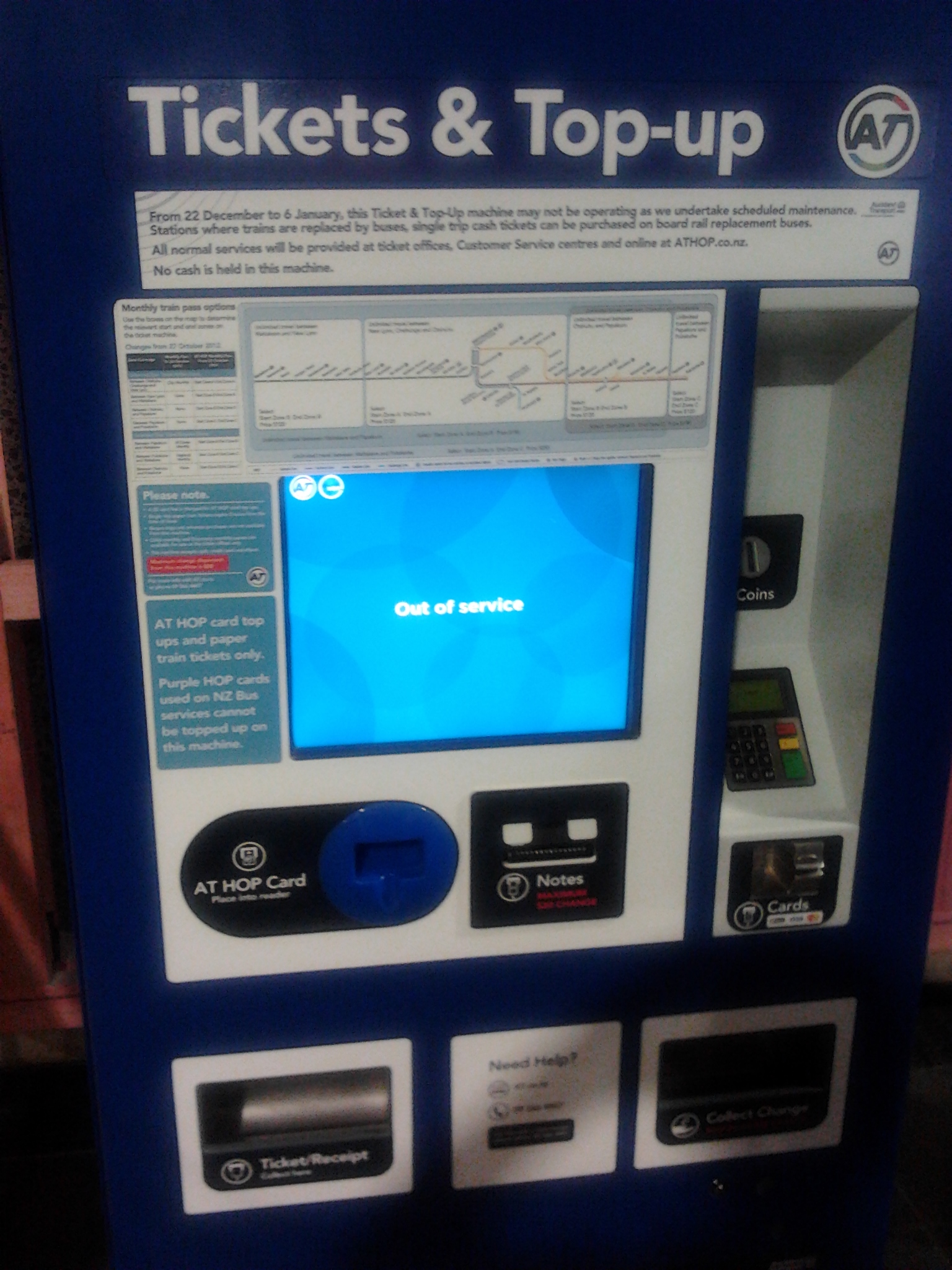
Yes the sole machine was out of order, however tech support had been notified 10mins earlier

Well I managed to personally stave off a fare rise for AT-HOP care users in September last year (Fare Increase Ctd) for rail users. However, this time no such luck – you are going to be lugged with it this time around.

From the NZ Herald this morning after AT announced it last yesterday

Students bear the brunt of Auckland public transport fare rises

Auckland Transport has been accused of targeting students with public transport fare rises that will also affect thousands of Hop and multi-trip ticket buyers.

Auckland Transport – which waited until late yesterday to announce changes approved by its board two months ago – will lift cash fares for tertiary students by between 7c and 40c a trip on June 3.

Adults who use Hop cards on trains or 10-trip tickets on buses also face fare rises of 2c to 22c a ride.

Ten-trip tickets on inner harbour ferry trips such as from Devonport, Bayswater and Birkenhead to the city will also rise by up to $2, but water transport will become considerably cheaper for Hop card users.

A single trip fare for a Hop card user from Devonport to the city will fall from $5.40c to $4.10c compared with an unchanged cash price of $6, but ten-trip tickets will rise to $41.

That is to align Hop cards with multi-trip tickets, which Auckland Transport ultimately wants to scrap in favour of seamless travel across ferries, trains and buses.

Public transport operations manager Mark Lambert said close to 50,000 public transport users could be affected. The changes were required before Hop cards were rolled out to the city’s buses between June 23 and November, he said.

Auckland Council transport chairman Mike Lee asked why fares could not be aligned downward, particularly on trains.

“It seems the most loyal passengers are being targeted – students and those taking multiple trips.”

Auckland had the highest public transport fares of any Australasian city and students were “a key part of our market”, he said.

Mr Lambert said an increase in the student discount from 20 per cent to 40 per cent in 2008 proved highly effective in lifting demand and getting cars off the road, but there was a limit to ratepayer subsidies.

Auckland University Students’ Association president Daniel Haines said the fare rises appeared aimed at those who could least afford to pre-load Hop cards for multiple trips.

He said transport was the second highest cost facing students, after accommodation, and the increases would hit those who faced long trips from suburbs offering lower rents.
• For detailed information about fare changes, visit maxx.co.nz.

I remember fighting tooth and nail to retain the existing fares seen here below rather than having AT-HOP users pay a technical rise as AT were to flat line the discount rates at 10% right across the board

Savings with AT HOP

Adult Child/Accessible Tertiary
Cash fare HOP fare You Save! Cash fare HOP fare You Save! Cash fare HOP fare You Save!
1 stage $1.90 $1.60 16% $1.10 $0.90 18% $1.90 $1.10 42%
2 stage $3.40 $3.00 12% $2.00 $1.70 15% $3.40 $2.10 38%
3 stage $4.50 $4.05 10% $2.60 $2.29 12% $4.50 $2.79 38%
4 stage $5.60 $5.04 10% $3.40 $3.00 12% $5.60 $3.47 38%
5 stage $6.80 $6.00 12% $4.00 $3.55 11% $6.80 $4.21 38%
6 stage $7.90 $6.90 13% $4.50 $4.05 10% $7.90 $4.75 40%
7 stage $9.00 $8.00 11% $5.30 $4.75 10% $9.00 $5.58 38%
8 stage $10.30 $9.05 12% $6.10 $5.44 11% $10.30 $6.38 38%


I believe the new fare guide is not out but reading the material from AT properly you have:

  • Cash fares remaining the same
  • AT-HOP card fares going up as the percentage discount level is lowered across most if not all areas.

So rather than targeting the cash users and hiking the cash fares (if the actual fares did need to go up in the first place) which would move people over to AT-HOP, Auckland Transport go and hit “the little guy” who is already on AT-HOP. Ouch and nasty!

The AT-HOP fare rise also seems to be the exact opposite of the Deloitte HOP review would suggest


One wonders what the thinking was behind the latest move?


The Karaka Collective Presentation

Musings on the presentation


I have been meaning to get this piece up onto the blog for a while about the Karaka Collective presentation recently. I have not got the Physical Powerpoint presentation on me but, will chase it down from the Collective and upload it to the blog ASAP.


On May 13 at Karaka Hall, Peter Fuller representing the Karaka Collective gave a presentation of the Collective’s “submission” and vision for Karaka West and Karaka North. This also included the Weymouth-Karaka Bridge which seems to be causing enough upset from both sides of the harbour.

I have been asked for comments on the meeting as I was there. These are my thoughts and some responses to queries I got asked which covered both the physical presentation and the subject matter at hand:


The meeting in itself was civil and hats off to residents knowing the issue is both passionate and a sore issue (for both Karaka and Weymouth).
For the presentation it was too long and should have only be at maximum 10 minutes for the matter presented. Anything beyond a 20 minute mark in presentations and you lose the audience. I nodded off at the 20 minute mark to which I decided to go over and start talking to Councillors Fletcher and Penrose on the matter at hand.

I would have recommended to follow what is called a split presentation when giving a talk on material that can be quite heavy or quite extensive.

The split presentation format I used for the Auckland Plan Committee last week in my Manukau Presentation ( https://voakl.net/2013/05/15/the-manukau-presentation/ ) had both a short power point presentation covering the main points and a “booklet” with all the information at hand.

Both the presentation and the booklet is sent to the committee in advance for advanced reading leaving me to go over briefly the main points of my argument. The committee with the booklet in hand then asks questions they might have. It was a useful technique and allowed maximum time for the main purpose; questions or what I like to call dialogue if executed properly.

Peter Fuller should have split the presentation with both a short 10 minute brief covering the main points, followed by a booklet with all the finer details for further reading – and had it released a week in advance. Bloggers like myself would have picked up on this and both republished the information and ran commentary on it.

Although in saying that there is a risk of preempting the Collective’s presentation of information and allowing the residents to form questions before hand. Or allow bloggers like myself to take control of a debate and frame the argument. Risks but risks the Collective will have to take if they want their plan to progress. Also something a particular Herald journalist and elected representatives on the North Shore find out too when they get debunked for utter misrepresentation of information. So the remedy is simple; tell the truth from the beginning and you have nothing to fear. Tell a porker and don’t expect much forgiveness from people nor bloggers in return. The Collective were being honest and their ambitions known.

While the material in Fuller’s presentation was too long and too heavy with the presentation too full of planning and officialdom jargon. It could also be taken that the information presented in a way that was talking down to everyone in the room. So a patronising effect that will chill residents and elected representatives

As for the questions they were pretty good, as for the answers they were not. Fuller was okay with the answering but the other two that were land owners I had real issue with. Their answers were put in a way of both putting down the room and issuing a challenge to the room to “meet them” in the Environment Court which is likely where this issue will end up. I have taken note from Brigid her comment which was (it is public):

“I was at that meeting and there seemed to be a difference between how Bruce Wallace envisioned a Weymouth-Karaka link and what Peter Fuller showed in his presentation. Bruce Wallace seemed to be wanting de facto motorway that would get him quicker to and from the airport and lower congestion on SH1 so he could get to work in under 20mins. However Don McKenzie the traffic expert on the Collective team said any Weymouth-Karaka link would not lessen congestion. And Peter Fuller spoke of a 60-80k Te Irirangi Drive/Te Rakau Drive equivalent. ”


This folks is what you call an effective “Buggers Muddle” – that is a pile of different answers that basically contradict each other to the point oxymoron becomes the norm. Three different answers that would have three very different consequences on that particular bridge. Not entirely confidence material nor helpful for both Auckland Transport and NZTA if they ever decided to run with the project. So lets look at the points individually:


  • Bruce Wallace seemed to be wanting de facto motorway that would get him quicker to and from the airport and lower congestion on SH1 so he could get to work in under 20mins.

Umm no and won’t happen. Auckland Transport and NZTA would have to overcome hell and high water from Southern Auckland to get a de-facto motorway put in and the bridge built. The Benefit Cost Ratio would be below 1.0 owing to the massive environment (physical and social) consequences (mainly negative) to the entire area of the de-facto motorway proposal. The “motorway” would not lower the congestion on State Highway One especially when the Greenfield areas get built up. The only way to bet congestion on State Highway One is to 6-lane the motorway all the way to Drury interchange, get the rail service more effective and efficient, and development some large employment centres close to home (Manukau, Wiri and Drury). If one wants a quick trip to the airport then may I suggest throwing your support and money behind the Airport Line from Manukau Station to the airport. Coupled with the EMU’s you could be there in well 30 minutes without the traffic crap on the roads…


  • However Don McKenzie the traffic expert on the Collective team said any Weymouth-Karaka link would not lessen congestion.

Excuse the language but No Crap Sherlock. It will not lessen congestion any where. All that bridge will do is cause rat running through an established community causing misery and literal hell. Yes I see Weymouth has the strip to allow a 4-lane road but it is now too late for the road. That road and bridge should of been built 50 years ago to 4-lane specifications before Weymouth took firm settlement. The settlement could of then be built around the road and bridge rather than the community now being built around the road. As I said the only way to lessen congestion is what I mentioned above. Through in a proper Regional Public Transport Plan and I would say you could remove all together 33% of the cars off the road at a minimum while still allowing transit choice


  • And Peter Fuller spoke of a 60-80k Te Irirangi Drive/Te Rakau Drive equivalent. “

So an expressway option. Last I looked that the communities around Te Irirangi Drive were built in a way that they were mitigated from the most serious aspects of that road. That is the road was built around the community with green shelter belts and lane ways to access the houses (that is no house has a direct driveway access to Te Irirgani Drive in the new sections of that road). The older sections at the Manukau end of the road and along Te Rakau Drive which do have direct driveway access to the road show the implications of planning not done properly. What we see in the older sections of Te Irirangi Drive with direct driveway access rather than green belts and lane ways off the road is what we would get in Weymouth. Not fun for the residents nor particular safe for an 80km expressway either… It is of note that the Manukau end of Te Irirangi is at 60km/h while the new Botany sections are at 80km/h. That 80km/h section has the greenbelt and lane ways shielding the houses from the road. I wonder if the Collective would be willing to stump the cash up to retrofit Weymouth Road with those lane way shields if they want their bridge built. Probably not, so I wouldn’t want a 80km/h expressway either without the proper mitigation in position FIRST.

In regards to Bruce Wallace (seem to remember him rather well for some odd reason), I don’t particularly care if one has had issues with the old Councils. Most of us would have had crap from the legacy Councils so we know what it is like (Manukau Station being a pet peeve for me with the old Manukau City Council that I am still trying to fix up with the current Council). But what I do care is them short circuiting the RUB process and apparently trying to buy their way into outcomes favouring them via the Unitary Plan.

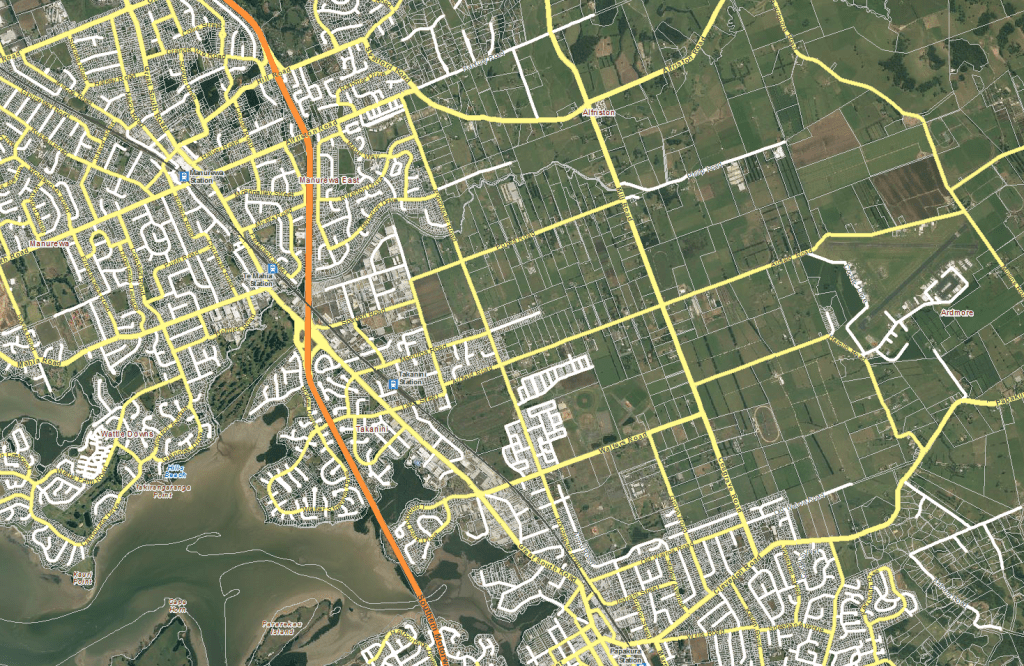
I did ask the final question for the night regards to the Collective supporting existing and new infrastructure projects before backing the Weymouth Bridge. Those projects include Glenora Road Station, Spartan Road Station, the Manukau Rail South Link, the RPTP with the bus routes and so on. While they said they would and might have done so (meaning I need to dig up submissions), I highly doubt it unless they prove me wrong over the next 7 years.
In saying that I am working on my submission to stave off that bridge as long as possible through a formation of a new regional park on the Karaka side. This has been mentioned before in this blog before

The submission will go up on my blog as soon as its finished.

Otherwise the meeting was handled well by the residents from a group short circuiting the processes the rest of us have to go through via claiming it is for the good of Auckland.


Those were my thoughts in the presentation. As I point out to the Collective, those ARE MY THOUGHTS AND INTERPRETATIONS of that presentation. If the Collective differs to my interpretations they are free to share a guest post – that is less than 2500 words and in plain English. Graphics help and can be facilitated easy into the blog.


In the mean time people do not forget your submission to the Unitary Plan in before May 31 – 5pm